

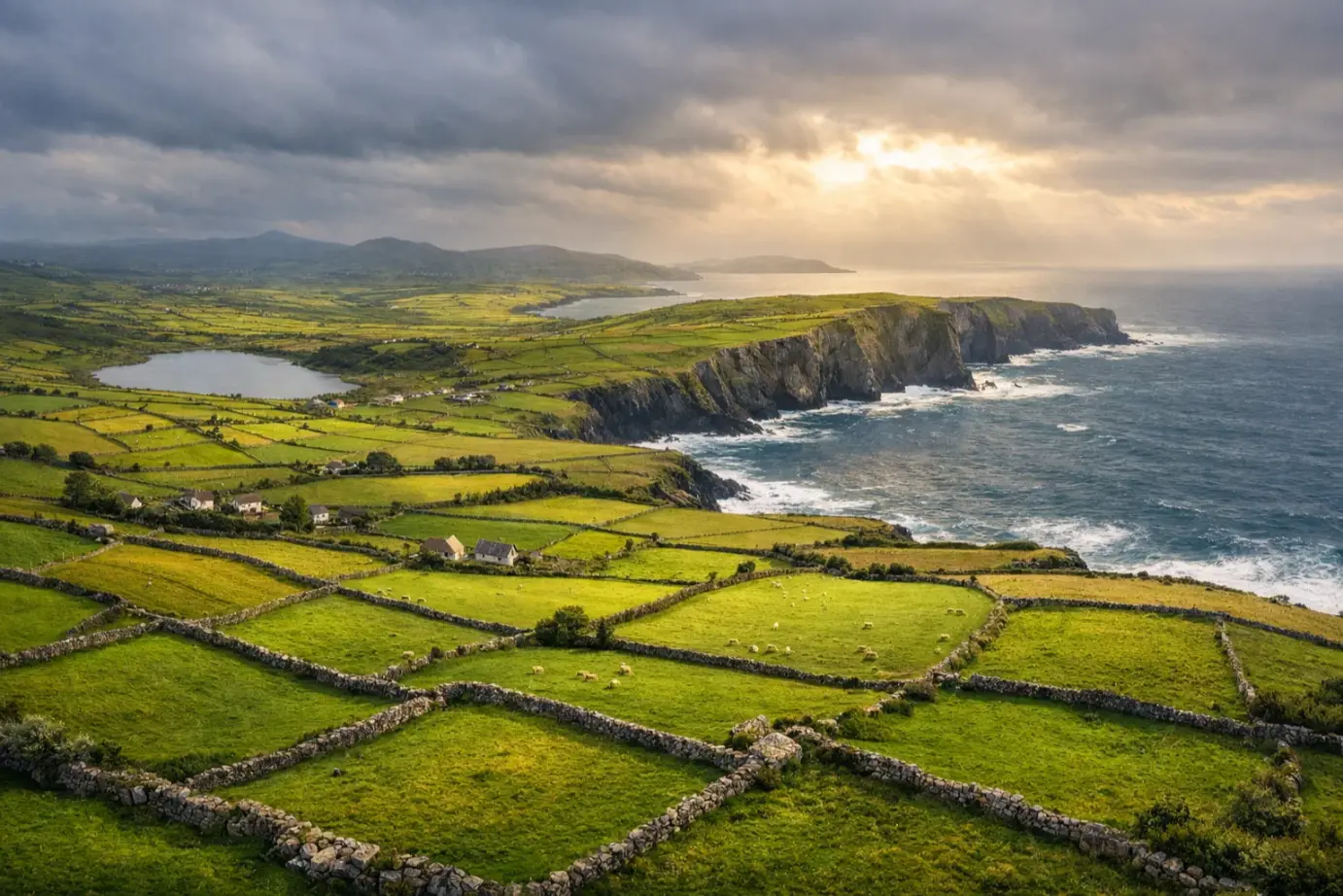
There is something deeply magnetic about Ireland. The island sits on the western edge of Europe like a jewel set in a wild and restless sea, its green hills rolling into dramatic cliffs, its ancient stone walls telling stories that stretch back thousands of years. Whether you have been dreaming of standing at the edge of the Cliffs of Moher, wandering the cobbled streets of Galway, or tracing the basalt columns of the Giant’s Causeway with your fingertips, Ireland rewards every traveler with a sense of wonder that is genuinely hard to find anywhere else on the continent.
The country carries a rare combination of qualities. Its landscapes are breathtaking without being manicured. Its history is layered and complex without being inaccessible. Its people are warm without being performative. And its culture, from the sessions of traditional music in a rain-soaked pub to the weight of ancient manuscripts housed in centuries-old libraries, has a depth that continues to surprise visitors who come expecting only pretty scenery and a good pint.
This Ireland travel guide brings together the 8 best places to visit across the island, from the buzzing capital of Dublin to the remote and elemental beauty of Connemara. Whether you are planning a two-week road trip or a focused long weekend, these destinations represent the very best that the Emerald Isle has to offer. Each location carries its own character, its own landscape, and its own invitation to slow down and absorb one of the warmest and most welcoming cultures in the world.
1. Dublin: The Heart of the Emerald Isle

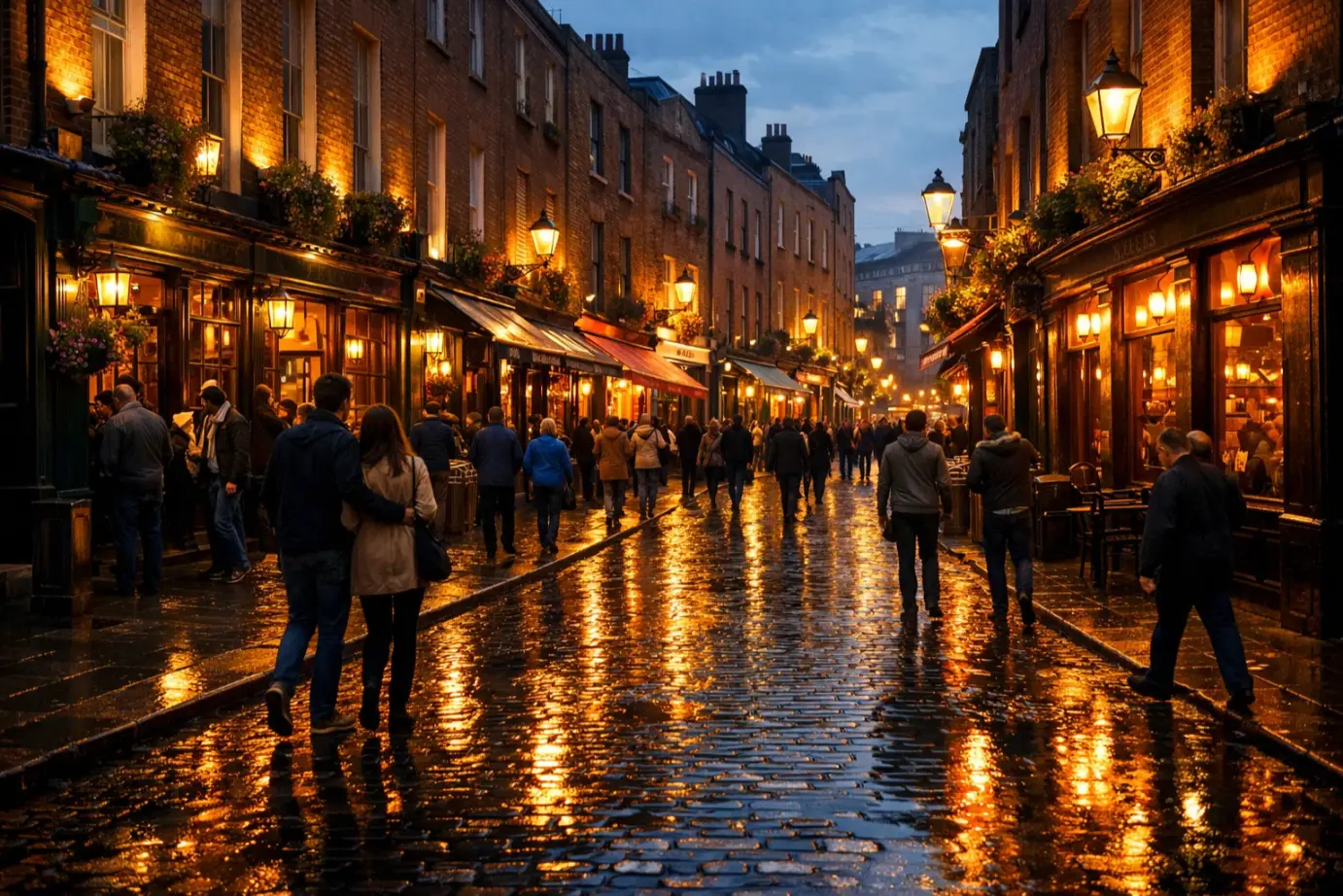
No Ireland travel guide would be complete without beginning in Dublin. The capital city is the perfect entry point for first-time visitors, offering a rich and layered mix of history, literature, music, and contemporary urban energy that keeps travelers engaged for days on end.
What to See and Do in Dublin
The Book of Kells at Trinity College is one of the most important manuscripts in the world, an illuminated gospel dating from around the ninth century that draws visitors from every corner of the globe. Trinity College itself, with its cobblestoned squares and Georgian architecture, is worth an hour of quiet exploration even before you step inside the Old Library.
Kilmainham Gaol offers a sobering and essential look at Ireland’s revolutionary history. The prison held many of the leaders of the 1916 Easter Rising, and a guided tour through its cold stone corridors brings the struggle for Irish independence to life in a way that no textbook can replicate. It is one of those rare historic sites that genuinely moves you.
Dublin’s pub culture is legendary, and a visit to the working-class pubs of Stoneybatter or Phibsborough rewards you with live traditional music, sharp wit, and the kind of genuine conversation that has defined Irish hospitality for centuries. The Guinness Storehouse, meanwhile, offers an interactive journey through the history of Ireland’s most famous export, finishing with a panoramic pint at the Gravity Bar with views across the city rooftops.
2. The Cliffs of Moher: Ireland’s Most Iconic Natural Wonder
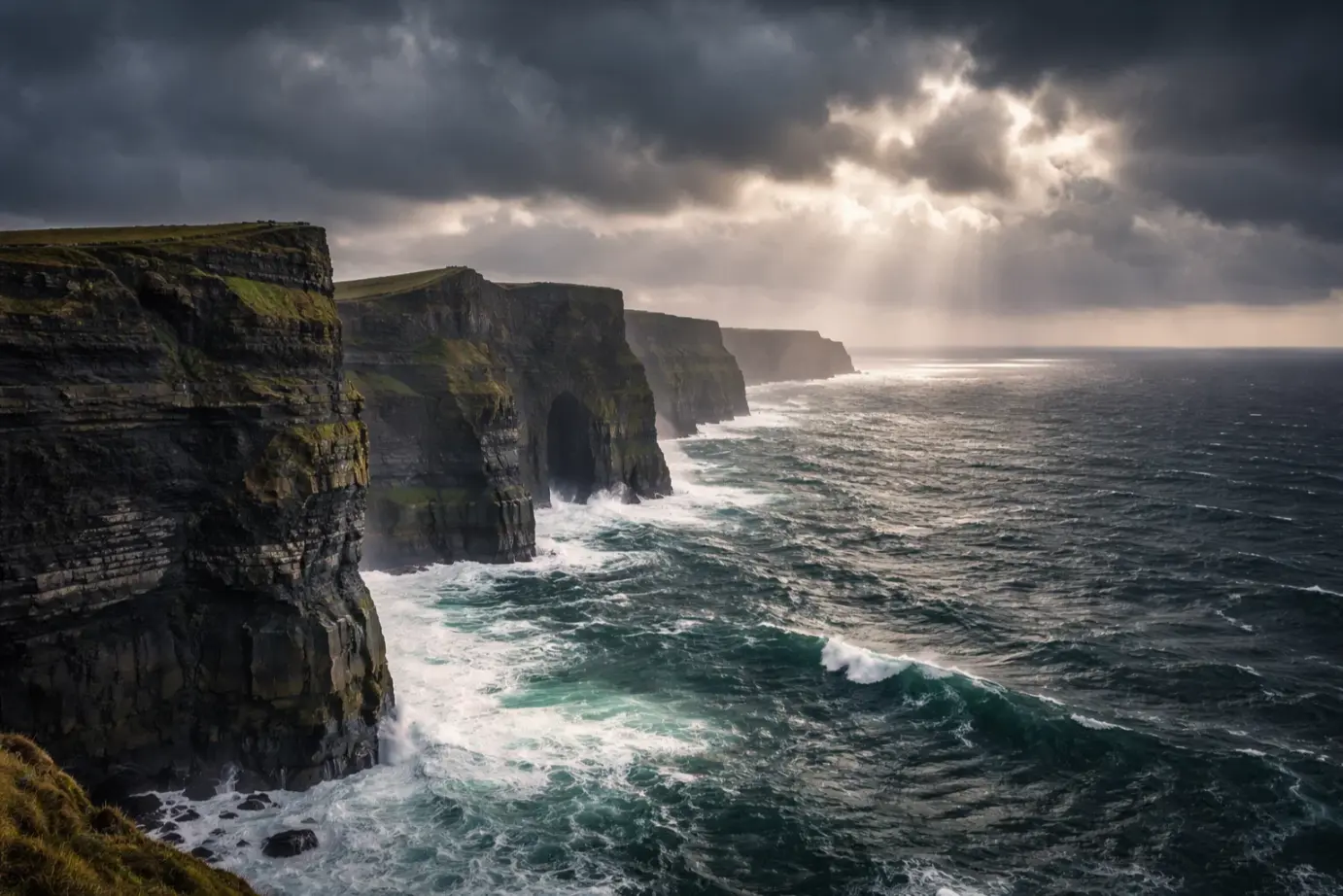
Rising to a height of 214 meters at their tallest point and stretching for eight kilometers along the Atlantic coast of County Clare, the Cliffs of Moher are Ireland’s most visited natural attraction. More than one million people make the journey to stand at their edge each year, and it is immediately clear why.
Planning Your Visit
The view from the cliff path on a clear day is extraordinary. The Aran Islands float on the horizon, Galway Bay curves to the north, and the Connemara coastline fills the distance with a blue-grey haze. On days when the Atlantic mist rolls in and the wind cuts hard across the plateau, the cliffs take on an entirely different atmosphere, haunting and elemental in a way that feels genuinely ancient.
The visitor center at the base of the cliffs provides useful context about the geology, wildlife, and folklore of the area. The cliffs are home to the largest colony of puffins in Ireland, along with razorbills, kittiwakes, and guillemots. If you visit between April and July, you stand a strong chance of watching these seabirds soaring and diving along the cliff face.
Most travelers pair a visit to the Cliffs of Moher with a stop in nearby Doolin, a small village that has earned an international reputation for traditional Irish music. Even on a quiet midweek evening, the pubs of Doolin fill with fiddles, flutes, and the rhythmic pulse of a bodhrán.
3. Galway: The Cultural Capital of the West
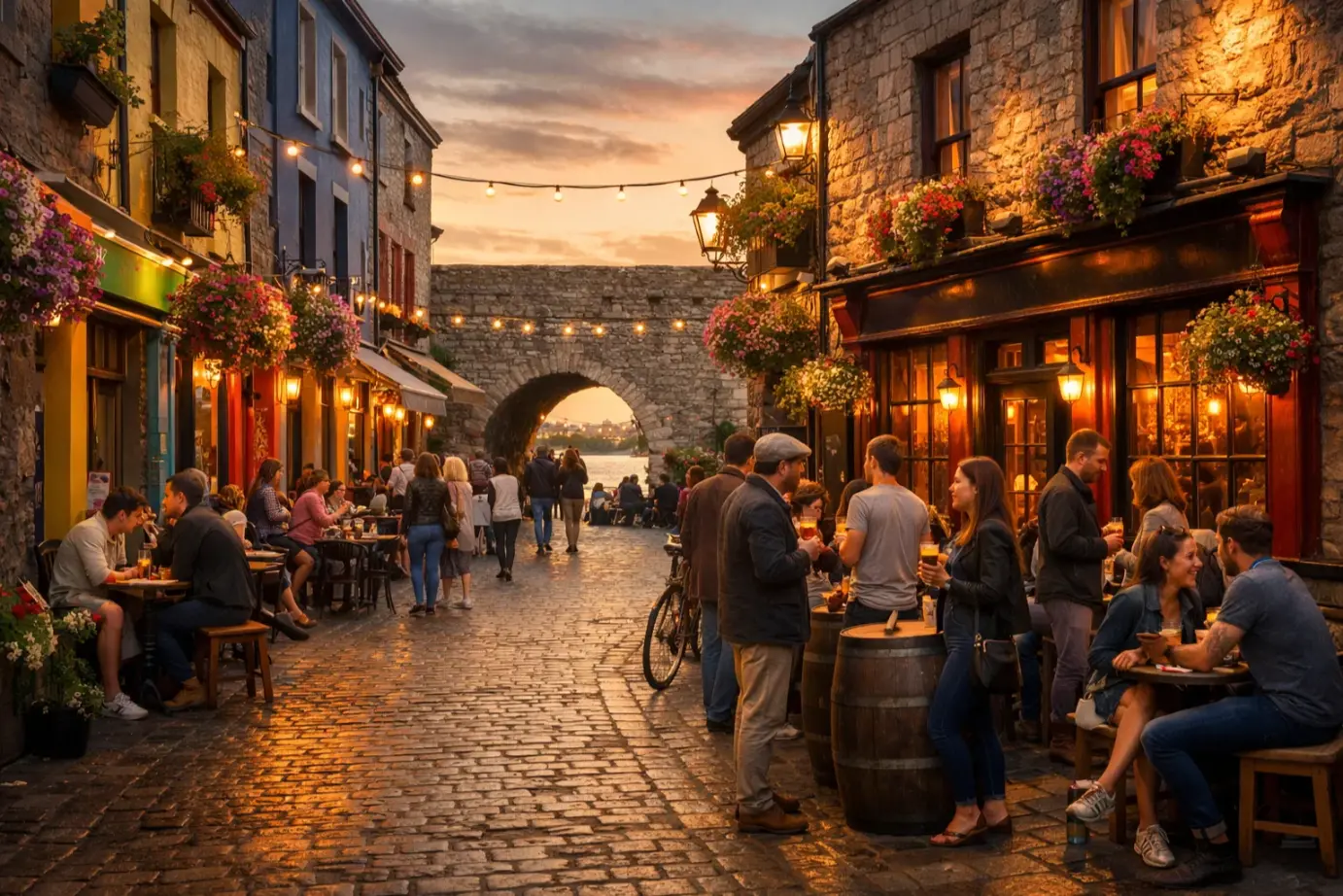
Galway sits at the mouth of Galway Bay on the west coast of Ireland, and it has long been regarded as the country’s cultural capital. The city is compact, walkable, and packed with independent restaurants, bookshops, art galleries, and some of the finest traditional music venues in the country. It carries a creative and youthful energy that is difficult to define but impossible to miss.
Exploring Galway City
The medieval heart of the city lies around Quay Street and the Spanish Arch, a remnant of the old city walls where galleons once unloaded cargoes of wine and spices from continental Europe. Today, the area around the arch is a gathering point for street performers, locals, and travelers alike, particularly on warm summer evenings when the city feels genuinely alive.
Galway also serves as the ideal base for exploring the Aran Islands, accessible by ferry from Rossaveel. The stone fort of Dun Aonghasa on Inis Mor, perched on a cliff edge 100 meters above the Atlantic, is one of the most dramatic prehistoric sites in Europe and a worthy destination in its own right. The crossing takes roughly 40 minutes and deposits you in a world that feels several centuries removed from the mainland.
4. The Ring of Kerry: Ireland’s Most Famous Scenic Drive
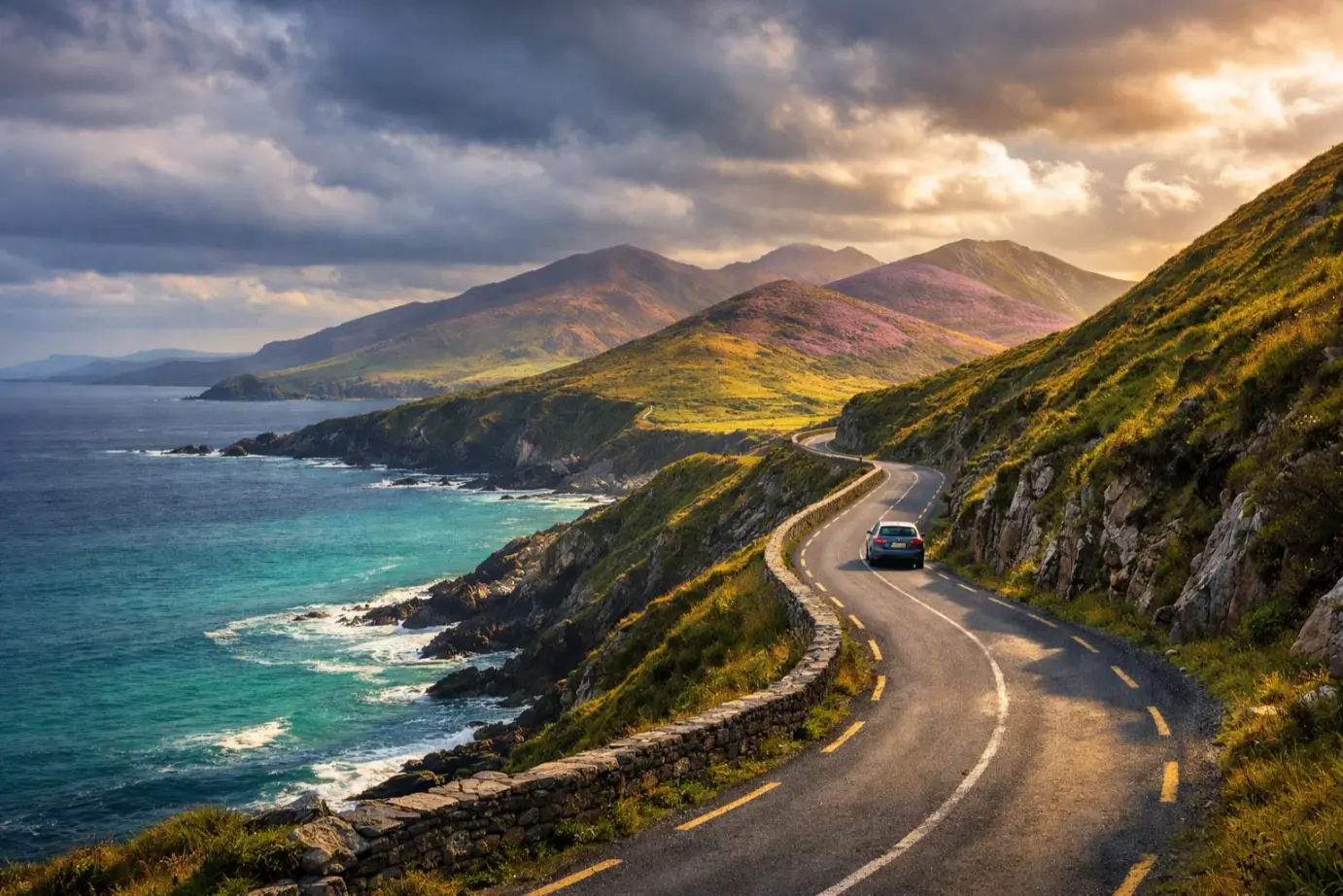
The Ring of Kerry is a 179-kilometre circular road route around the Iveragh Peninsula in County Kerry, and it consistently ranks among the most beautiful driving routes in the world. The route takes in mountain passes, glacial lakes, ancient stone forts, and a coastline of extraordinary variety that changes character with every bend in the road.
Highlights Along the Ring
The village of Kenmare serves as an excellent base for exploring the ring, with a strong selection of restaurants, accommodation, and independent shops. From Kenmare, the road climbs through Moll’s Gap and drops toward Killarney, passing Torc Waterfall and the famous Ladies’ View, a panoramic overlook named after the ladies in waiting of Queen Victoria who reportedly stopped there to admire the scenery during a royal visit in 1861.
Skellig Michael, the rocky island visible off the tip of the Iveragh Peninsula, is one of the most extraordinary places in Ireland. A UNESCO World Heritage Site, the island was home to a community of early Christian monks who constructed a monastery of dry-stone beehive huts on its near-vertical slopes between the sixth and twelfth centuries. Access is by boat from Portmagee and requires booking well in advance, particularly during the summer months.
5. Killarney National Park: Nature at Its Most Magnificent
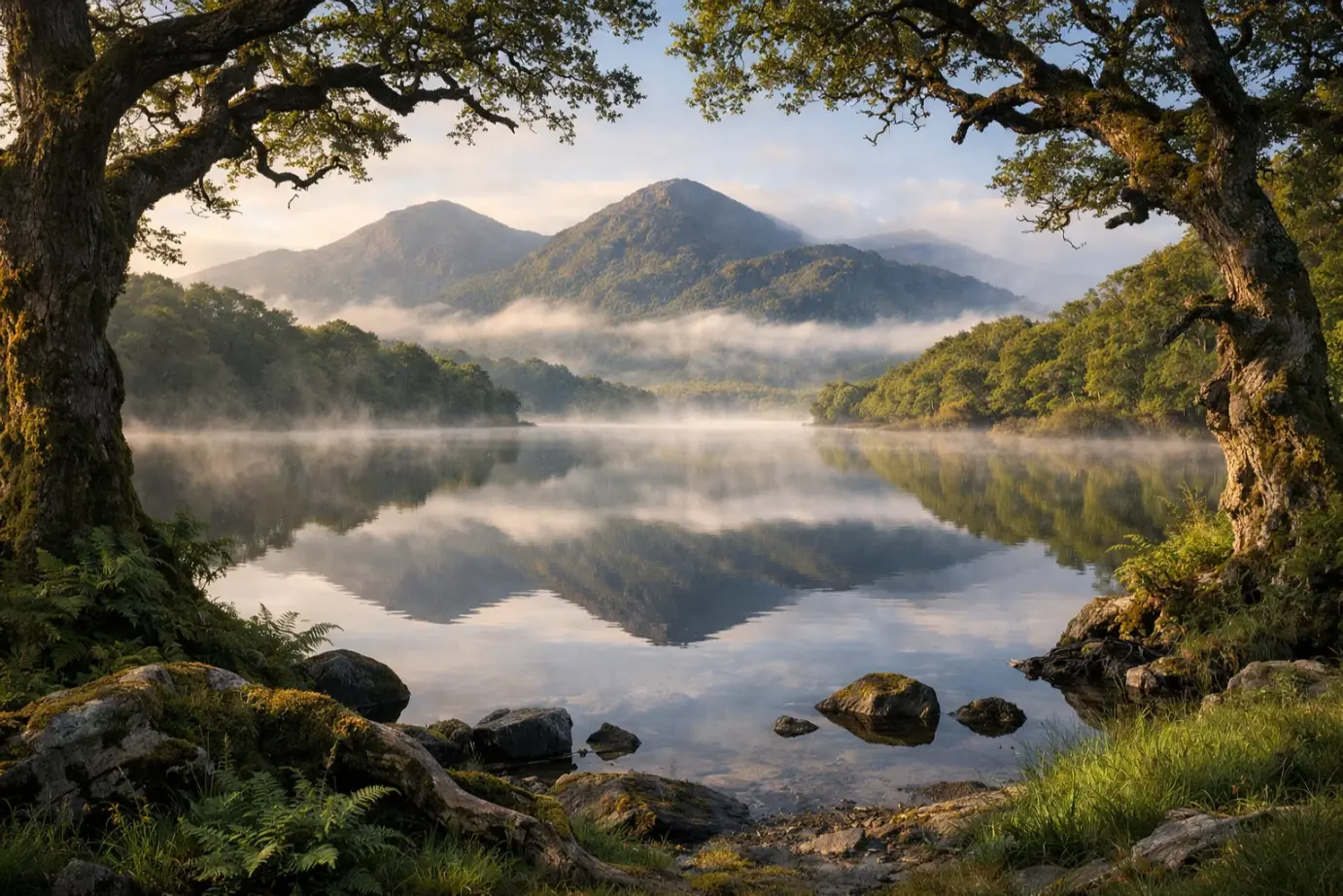
Killarney National Park covers 10,000 hectares of mountains, lakes, and ancient oak woodland, and it is the kind of landscape that rewards those who take the time to leave the main paths and explore on foot. The national park was the first to be established in Ireland and remains one of the finest protected landscapes in the country.
What to See Inside the Park
The three lakes of Killarney, Lough Leane, Muckross Lake, and the Upper Lake, form the centerpiece of the park and can be explored by boat, by bicycle along the lakeside paths, or by traditional jaunting car. The views across the water toward the MacGillycuddy’s Reeks, Ireland’s highest mountain range, are among the most celebrated in the country and justify the visit on their own terms.
Muckross House, a 19th-century Victorian mansion sitting at the edge of Muckross Lake, provides a fascinating insight into the lives of the landed gentry who shaped the Irish countryside for centuries. The Gap of Dunloe, a narrow mountain pass carved by glacial action, is best explored on foot or by bicycle and takes roughly three hours to walk from end to end, passing a series of small lakes connected by the tumbling stream below.
6. Glendalough: Ireland’s Most Evocative Monastic Site
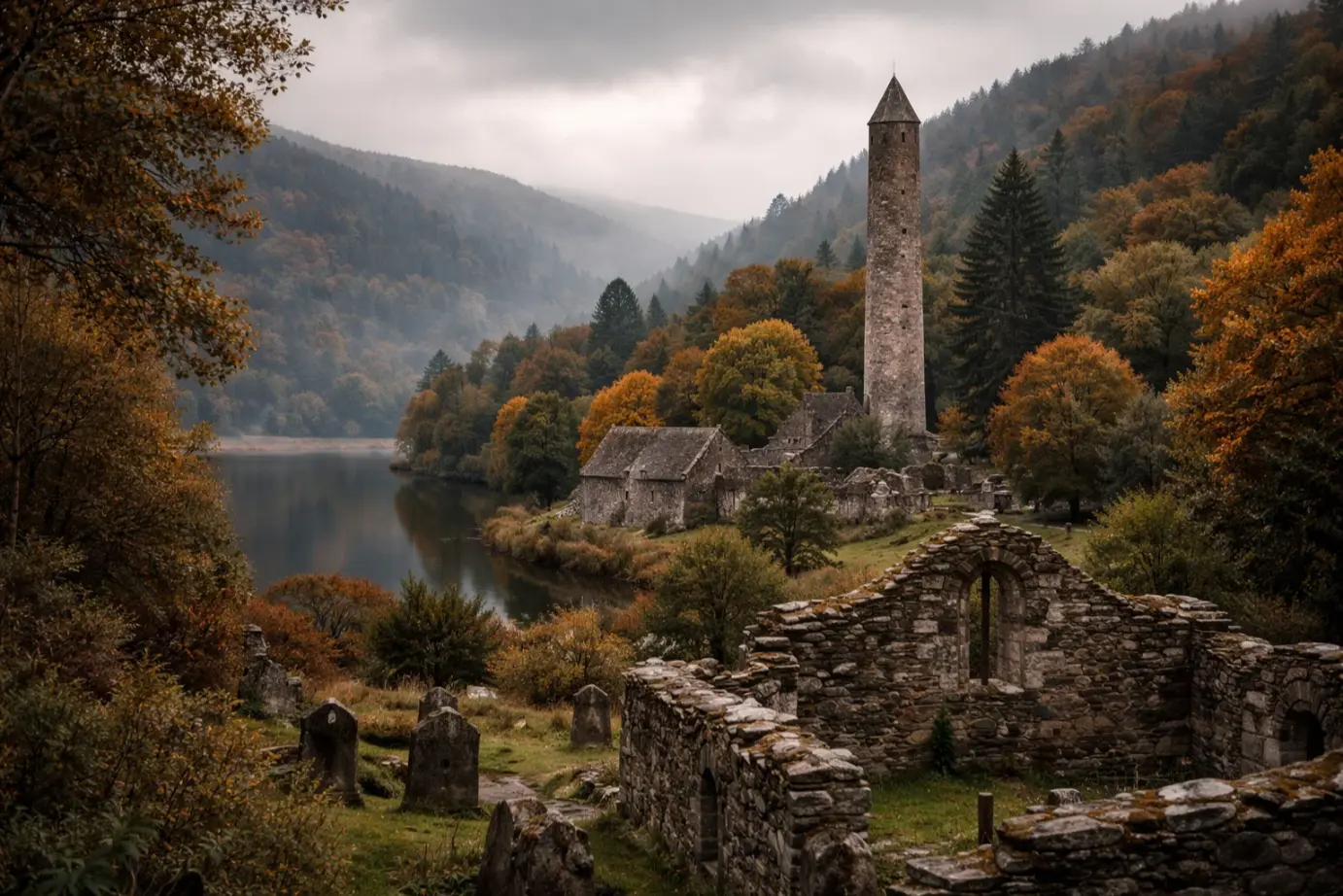
Nestled in a wooded valley in the Wicklow Mountains, Glendalough is one of the most visited and most affecting historic sites in Ireland. Founded by Saint Kevin in the sixth century, the monastic settlement grew into one of the great centers of learning in early medieval Europe, drawing scholars, pilgrims, and students from across the continent.
Exploring the Valley
The remains of the monastic city, including a remarkably preserved round tower standing 30 meters tall, a cathedral, several churches, and a scatter of carved stone crosses, are spread across a compact area that can be covered comfortably on foot in two to three hours. The setting amplifies everything. The ruins sit in a glacial valley flanked by wooded hillsides, with the calm waters of the Upper and Lower Lakes reflecting the sky above and carrying a stillness that feels entirely appropriate for a place of contemplation.
Glendalough is located approximately an hour south of Dublin by car, making it an excellent and highly rewarding day trip for travelers based in the capital. The village of Laragh, a short walk from the monastic site, has a handful of good cafes and is a pleasant place to decompress after a morning among the ruins.
7. The Giant’s Causeway: A Geological Marvel on the Antrim Coast
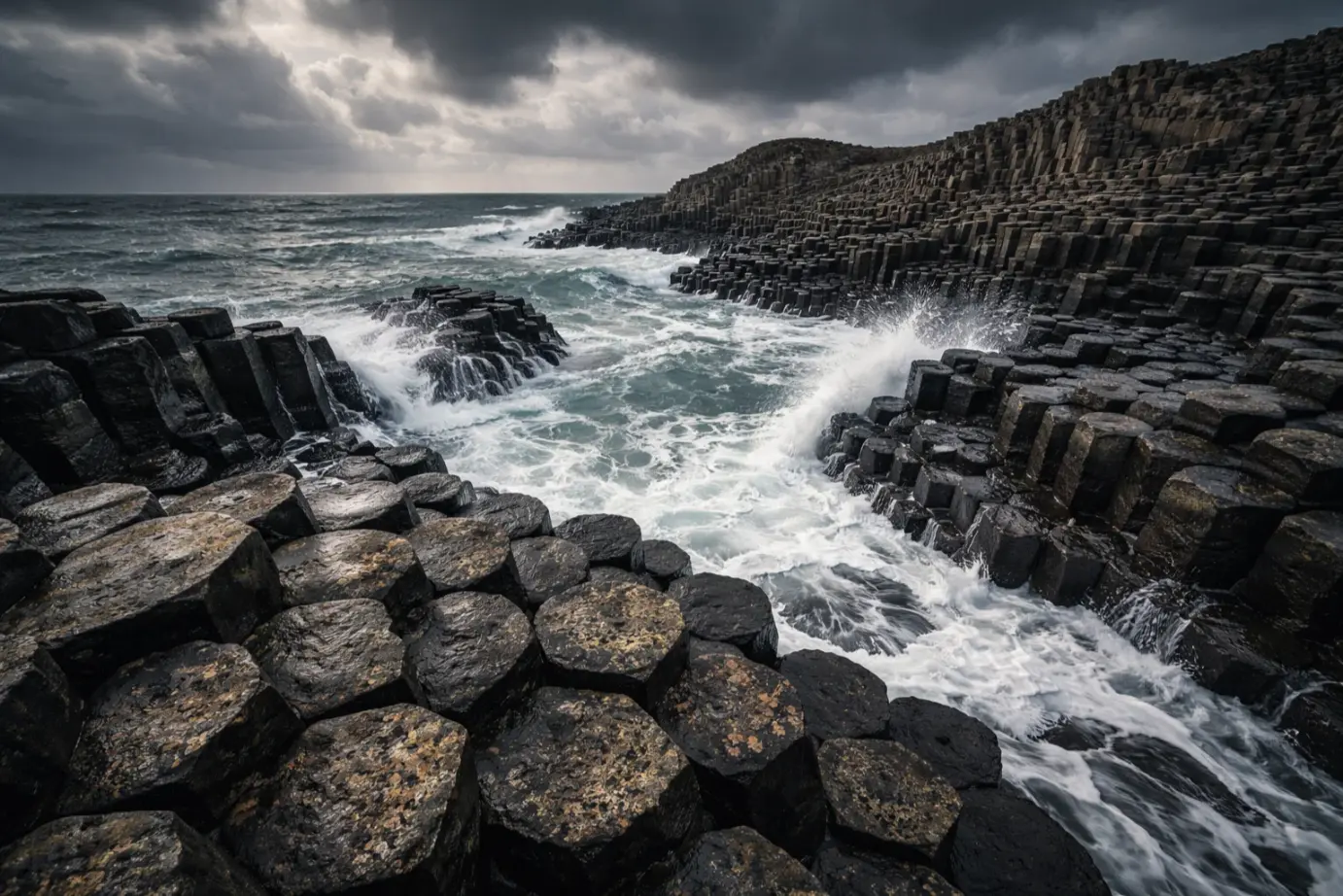
The Giant’s Causeway, located on the north Antrim coast in Northern Ireland, is one of the most extraordinary natural formations in Europe and a UNESCO World Heritage Site. The causeway consists of approximately 40,000 interlocking basalt columns formed by ancient volcanic activity around 60 million years ago, their hexagonal tops fitting together with a precision that has long inspired legends of giants building a road to Scotland.
Visiting the Causeway Coast
The visitor center at the site provides a thorough introduction to both the geology of the columns and the folklore that surrounds them. The most famous legend holds that the Irish giant Finn McCool built the causeway to cross to Scotland and face his rival Benandonner, and the story is woven into the landscape and the culture of the entire north Antrim coast.
The broader Causeway Coast offers some of the most spectacular coastal scenery in the British Isles. The Carrick-a-Rede Rope Bridge, suspended nearly 30 meters above the sea between the mainland and a small island once used by salmon fishermen, provides an exhilarating crossing with views stretching to Rathlin Island and the Scottish coast. Dunluce Castle, a medieval ruin perched dramatically on a cliff edge a short drive west of the causeway, adds historical depth to any visit to the area. The Old Bushmills Distillery nearby, the oldest licensed whiskey distillery in the world, offers excellent guided tours that finish with a proper tasting.
8. Connemara: The Wild and Beautiful Heart of the West
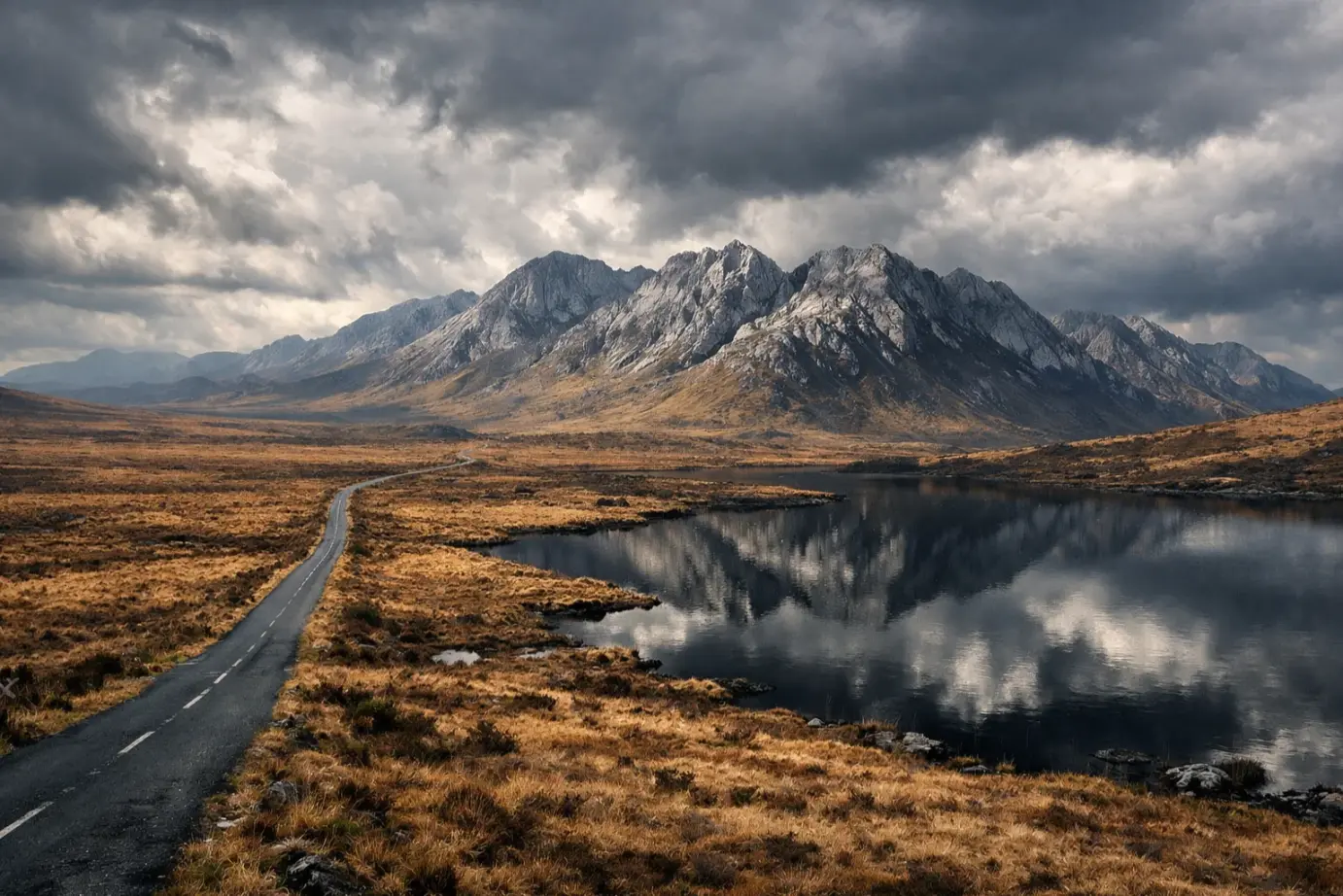
Connemara, the wild region of mountains, blanket bogs, lakes, and Atlantic coastline stretching across the western part of County Galway, is perhaps the most evocative landscape in all of Ireland. The area carries a sense of remoteness and elemental beauty that has attracted writers, artists, and wanderers for generations. It is a place that asks you to be quiet and pay attention.
What Makes Connemara Unique
The Twelve Bens, a compact range of quartzite peaks rising above a sea of brown bog and glittering lakes, form the visual centerpiece of the region. The Connemara National Park, centered on the village of Letterfrack, protects a large portion of this landscape and offers walking trails ranging from gentle lakeside paths to serious mountain ascents with panoramic views across the Atlantic.
Kylemore Abbey, a Victorian castle built in the 1860s as a private home and later converted into a Benedictine monastery, sits at the edge of a lake with its reflection shimmering in the still water. The abbey is surrounded by a meticulously restored walled Victorian garden and provides one of the most photographed views in the west of Ireland. The town of Clifden, known as the capital of Connemara, serves as a comfortable base with a strong selection of restaurants and traditional music pubs.
Irish is still spoken as a living language in parts of Connemara. The region falls within the Gaeltacht, the collective term for Irish-speaking areas of the country, and in some villages, Irish is the primary language of everyday life. This cultural dimension adds a layer of depth to any visit that distinguishes Connemara from almost anywhere else in the country and reminds you that Ireland’s identity runs far deeper than its tourist trail.
Conclusion
Ireland is a country that consistently exceeds expectations. From the ancient stones of Glendalough to the volcanic drama of the Giant’s Causeway, from the literary streets of Dublin to the wild silence of Connemara, the island offers a range of experiences that would take several visits to fully absorb. The 8 destinations covered in this Ireland travel guide represent a genuine cross-section of everything that makes Ireland one of the most compelling travel destinations in the world.
Planning a trip is straightforward. Dublin Airport connects to most major international hubs, and a rental car remains the most flexible and rewarding way to explore outside the capital. Most travelers find that 10 to 14 days is enough time to cover the highlights without feeling rushed, though Ireland has a way of persuading you to stay longer than you planned. There is always another village, another viewpoint, another pub worth sitting in for one more hour. That unhurried, generous quality is ultimately what makes Ireland so hard to leave.
You mat also like this post: Times Square: A Guide to New York City’s Most Vibrant Hub
Frequently Asked Questions
1. What is the best time of year to visit Ireland?
May, June, and September offer the most reliable weather along with longer daylight hours and fewer crowds than the peak summer months of July and August. Ireland is a year-round destination, and winter brings dramatic Atlantic conditions and an atmospheric, uncrowded experience particularly suited to those who enjoy wild coastlines and quiet heritage sites.
2. Do I need a car to travel around Ireland?
A car is strongly recommended for exploring outside Dublin. Public transport connects the main cities reasonably well, but many of the best natural landscapes, coastal drives, and smaller villages are not accessible by bus or train. Irish roads outside the motorway network can be narrow, so a smaller vehicle is advisable for visitors unfamiliar with rural driving.
3. Is Ireland an expensive destination?
Ireland sits at the mid-to-upper range of European travel costs. Dublin is the most expensive part of the country, with accommodation and dining prices comparable to other major European capitals. Costs reduce noticeably once you move into rural areas, where bed and breakfast accommodation and locally owned restaurants offer considerably better value.
4. Can I visit Northern Ireland on the same trip?
Yes, and it is highly recommended. Northern Ireland is part of the United Kingdom but shares the island with the Republic, and there is no border crossing or passport control between the two jurisdictions. The Giant’s Causeway, the Antrim Coast, and the city of Belfast are all easily combined with a visit to the Republic on a single itinerary.
5. How many days do I need to see the best of Ireland?
A minimum of seven days allows you to cover Dublin and one or two regional destinations at a comfortable pace. Ten to fourteen days is the ideal range for exploring the highlights of both the east and west coasts. Three weeks or more allows for a genuinely unhurried and deeply rewarding journey around the full island.