

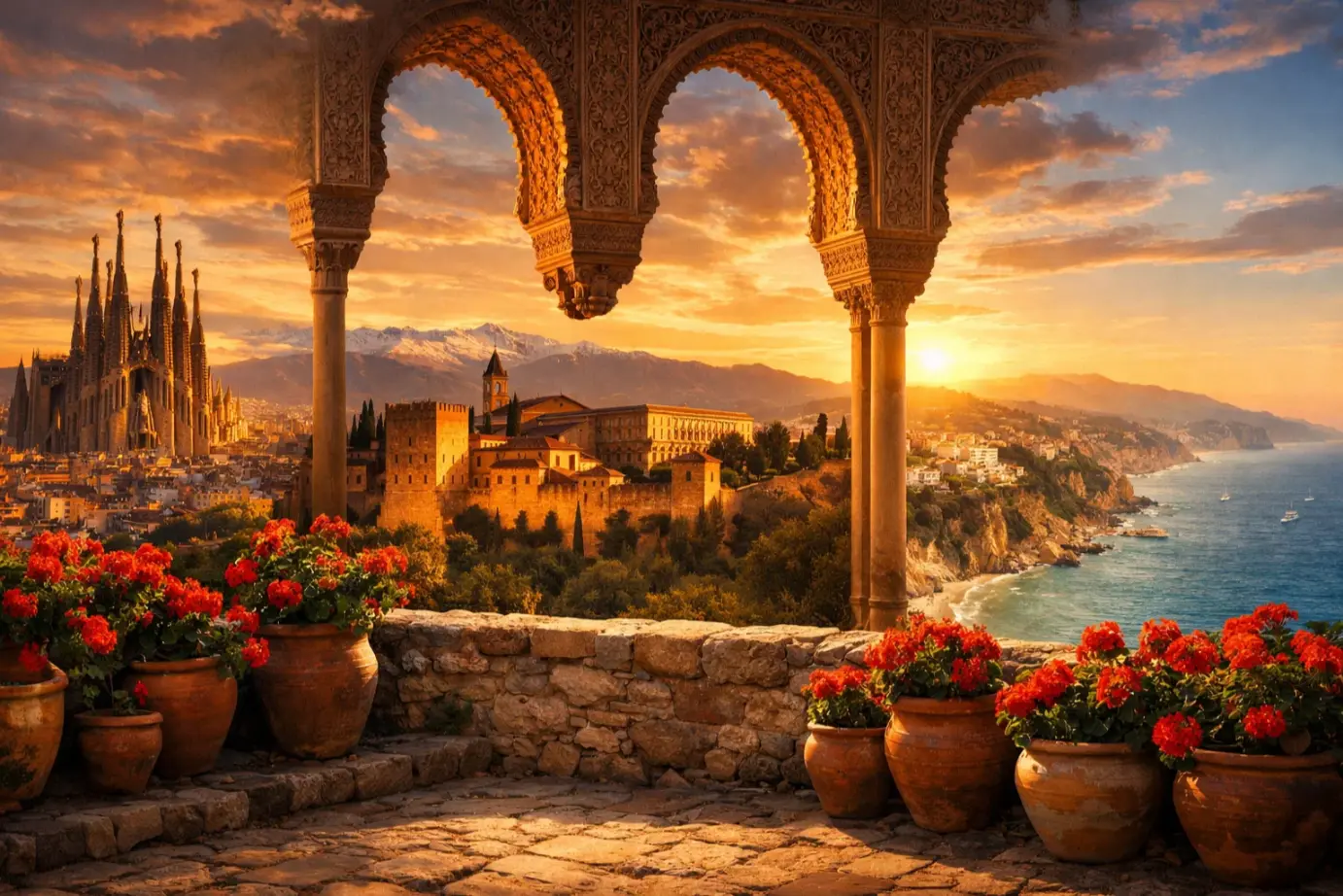
Spain is one of those rare destinations that seems almost too good to be true. It is the kind of country where a single trip can take you from sunburned Mediterranean cliffs to snow-dusted mountain towns, from medieval Moorish palaces to avant-garde architectural marvels that were completed within the last few decades. As the second most visited country in the world, Spain draws tens of millions of travelers every year, and it is not hard to understand why. The food alone is reason enough to book a flight.
For first-time visitors, however, Spain can feel overwhelming. The country is larger than most people expect, its regions are remarkably distinct from one another, and the sheer volume of things to see and do can make planning feel like a puzzle with too many pieces. That is exactly where a reliable Spain travel guide becomes your most valuable tool.
This guide focuses on the 10 best Spain travel spots that every first-timer should seriously consider. Whether you are drawn to world-class art museums, ancient Islamic architecture, sun-drenched beaches, or some of the finest food in Europe, these destinations offer the most rewarding and well-rounded introduction to Spanish life.
Why Spain Belongs at the Top of Every First-Timer’s List

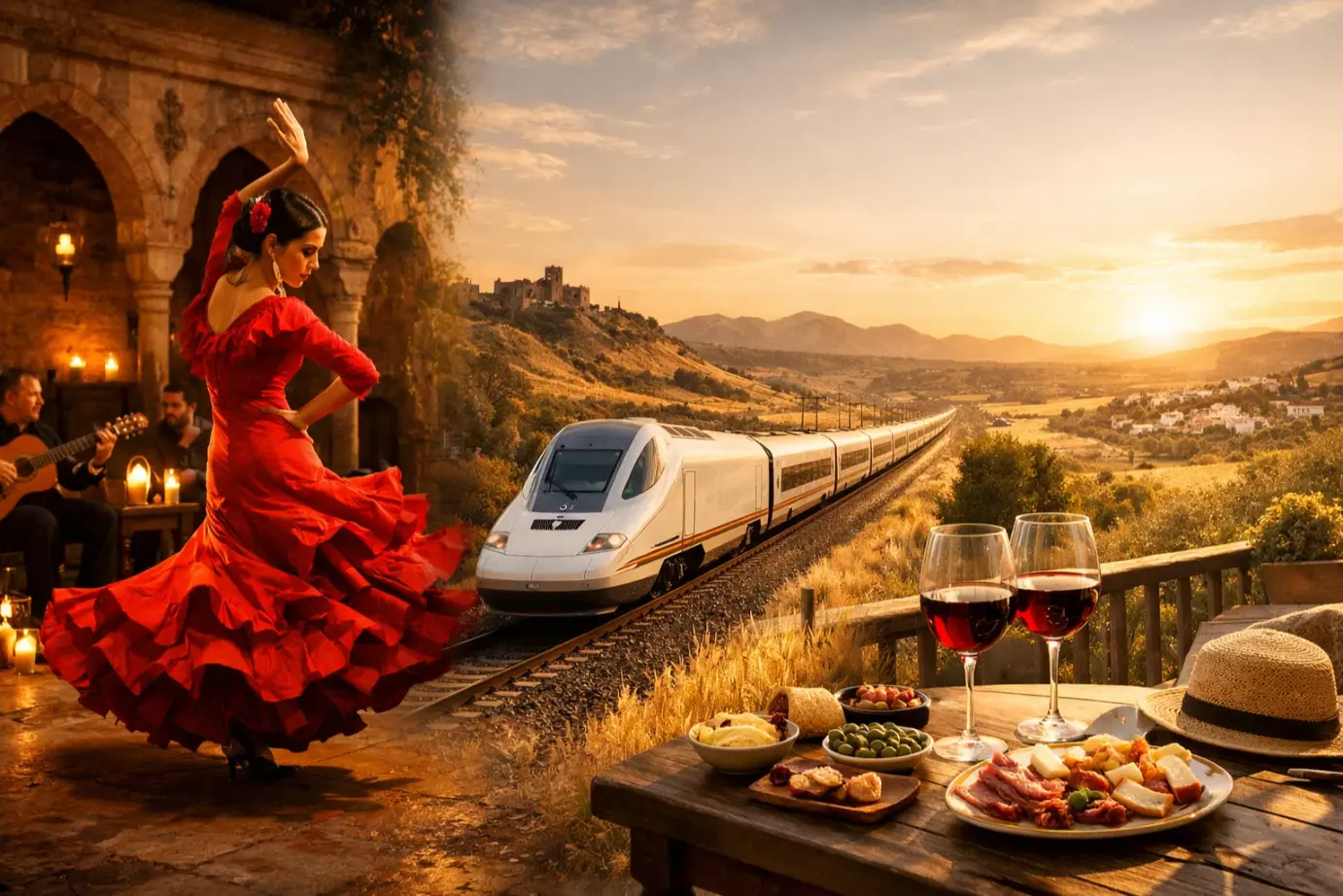
Before diving into the top 10 destinations, it helps to understand what makes Spain so uniquely compelling. Unlike countries where culture is largely homogeneous from one region to the next, Spain is essentially a collection of distinct kingdoms and cultures that were gradually unified over centuries. The Basque Country in the north has its own ancient language, food traditions, and identity. Catalonia, home to Barcelona, operates with a fiercely independent cultural spirit. Andalusia in the south carries the deepest marks of eight centuries of Moorish rule. Visiting Spain means experiencing several worlds within one country.
Spain also offers genuine value. Compared to France, Italy, or the United Kingdom, it remains one of the more affordable travel destinations in Western Europe. Accommodation is varied and reasonably priced, the AVE high-speed train network connects major cities efficiently, and a full meal with wine at a solid local restaurant rarely feels like a luxury expenditure. The best time to visit Spain is generally during spring from March through May or autumn from September through November, when the weather is mild, the crowds are manageable, and the landscapes are at their most vivid.
1. Barcelona: Where Art and Architecture Define the Skyline
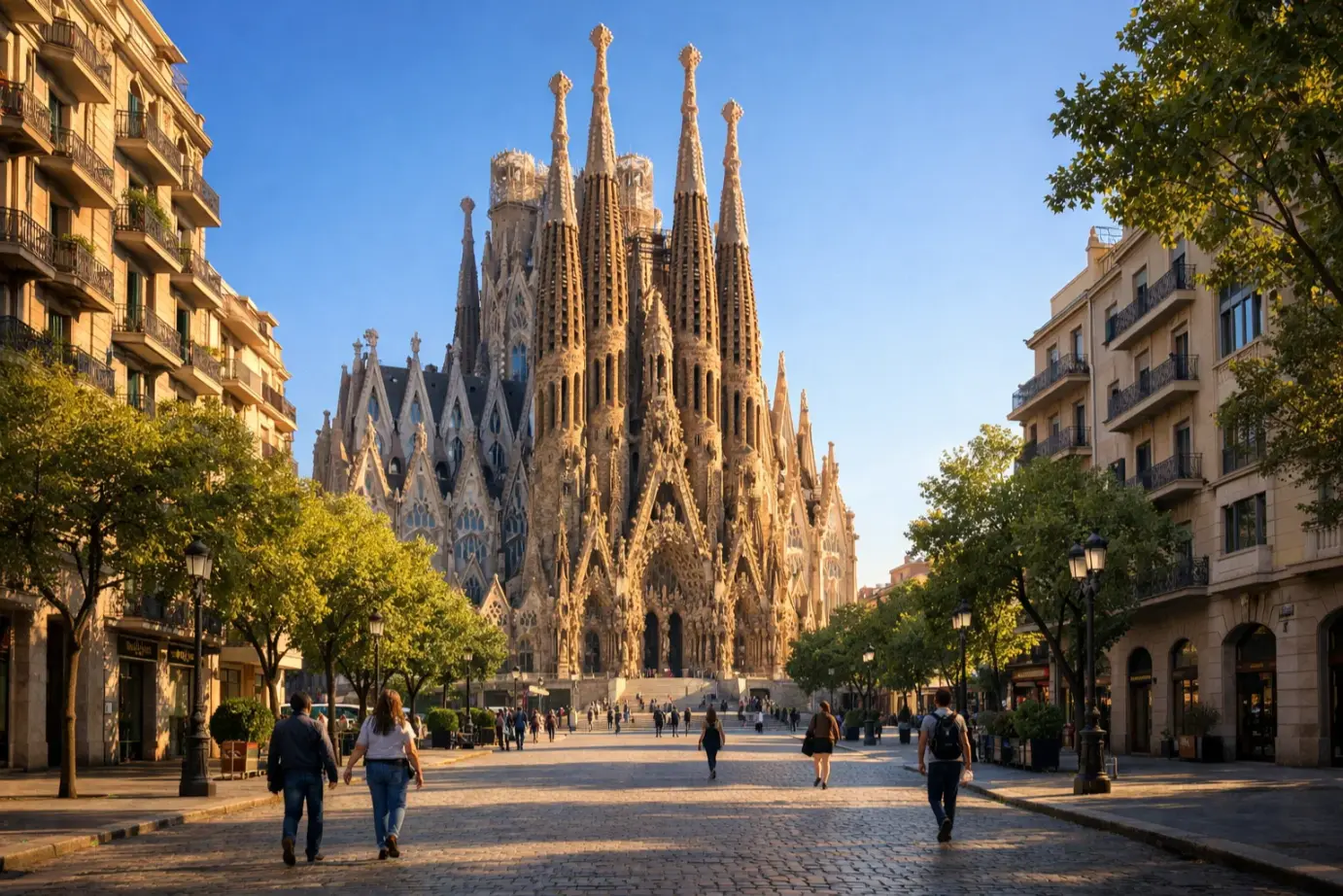
Almost every first-time visitor to Spain puts Barcelona at the top of the list, and rightfully so. The capital of Catalonia is one of the most visually striking cities in the world. Its identity is inseparable from the work of Antoni Gaudi, the Catalan architect whose buildings seem to belong to another dimension entirely. The Sagrada Familia basilica, which has been under continuous construction since 1882, remains one of the most breathtaking structures on Earth. Walking inside and watching the colored light filter through its elaborate stained glass is a genuinely moving experience.
What to See and Do in Barcelona
Beyond Gaudi, Barcelona rewards slow exploration. The Gothic Quarter is a tangle of narrow medieval streets where you can spend hours wandering without a plan. Park Guell offers panoramic views of the city alongside whimsical tiled mosaics and curving stone terraces. The Boqueria Market on Las Ramblas is a feast for the senses, overflowing with fresh seafood, cured ham, fruit, and local cheeses. The beach district of Barceloneta gives the city a relaxed coastal dimension that few European capitals can match. Book your Sagrada Familia tickets well in advance as they sell out weeks ahead of schedule.
2. Madrid: The Cultural Capital with a Royal Heartbeat
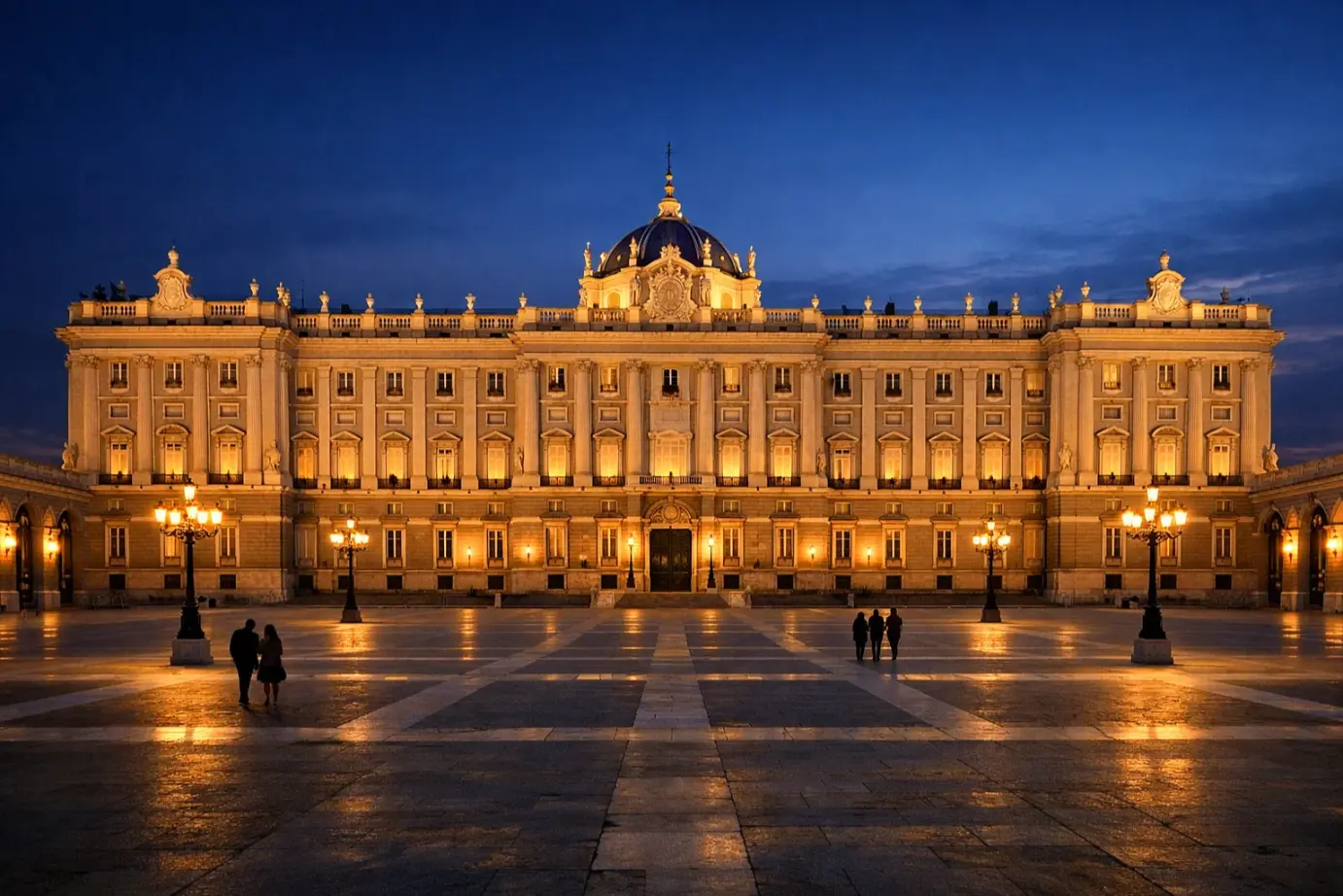
Spain’s capital is a city of grand boulevards, world-class museums, and a nightlife culture that starts when most of Europe has already gone to bed. Madrid does not have the immediate visual drama of Barcelona, but it grows on you in ways that are harder to articulate and ultimately more lasting. The Prado Museum houses one of the finest collections of European art anywhere in the world, with masterworks by Velazquez, Goya, El Greco, and Rubens filling room after magnificent room.
Madrid Highlights for First-Timers
The Reina Sofia Museum is where you will find Picasso’s Guernica, a massive anti-war painting that stops visitors cold with its raw emotional power. The Royal Palace, with over 3,000 rooms, is among the largest official royal residences in Europe and is open for public tours. Retiro Park offers a beautiful green escape in the middle of the city. For food and atmosphere, the neighborhoods of Malasana and Chueca are the most rewarding places to eat, drink, and watch Madrid’s famously sociable locals go about their evenings.
3. Seville: The Soul of Andalusia and the Birthplace of Flamenco

If Barcelona is Spain’s most visually inventive city and Madrid is its intellectual engine, then Seville is its emotional heart. The capital of Andalusia is widely considered the birthplace of flamenco, and the art form is not merely a tourist performance here. It lives in the city’s bars, its plazas, and the cobblestone streets of the old Jewish quarter of Santa Cruz. Seville during the evening, when the heat of the day has passed and the streets fill with the sound of guitar and conversation, is one of the most atmospheric experiences in all of Europe.
Top Attractions in Seville
The Seville Cathedral is the largest Gothic cathedral in the world and also holds the tomb of Christopher Columbus. The Royal Alcazar, a palace complex that served successive ruling dynasties from the Moors to the Spanish royal family, is a masterpiece of Mudejar architecture and one of the finest examples of Islamic-influenced design in Europe. The Plaza de Espana, built in 1929, is a sweeping semicircular plaza adorned with tiled alcoves representing every province in Spain and is arguably the most photogenic public space in the country.
4. Granada: Home of the Legendary Alhambra Palace
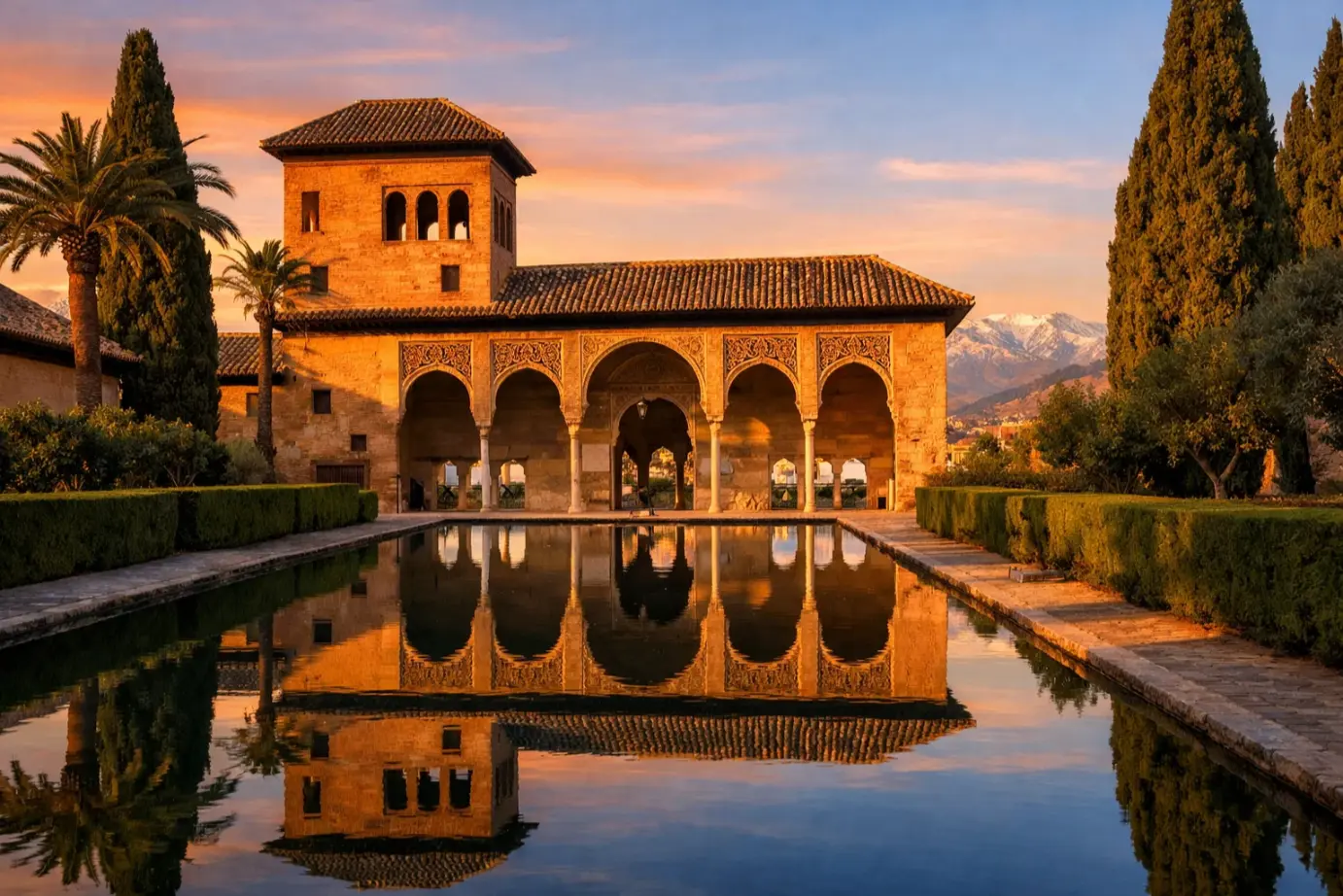
Granada occupies a special place in the Spanish imagination. Nestled at the foot of the Sierra Nevada mountains, it was the last stronghold of Moorish rule in Spain, and the cultural residue of that era is woven into every corner of the city. The Alhambra Palace and Fortress is the undisputed centerpiece of any visit, a sprawling complex of ornate rooms, serene courtyards, and lush gardens built for the Moorish monarchs of the Nasrid dynasty in the 13th and 14th centuries.
Exploring the Alhambra and Granada’s Old Town
The Alhambra receives enormous visitor numbers and tickets must be booked weeks in advance. A guided tour is strongly recommended to fully appreciate the layers of history embedded in its architecture. Beyond the Alhambra, the Albaicin neighborhood is a UNESCO-listed Moorish quarter of whitewashed houses and narrow alleys that climbs the hillside opposite the palace. Granada is also one of the few Spanish cities where ordering a drink at a bar still comes with a free tapa, making it a wonderful destination for budget-conscious travelers.
5. Valencia: Paella, Futuristic Architecture, and Mediterranean Charm
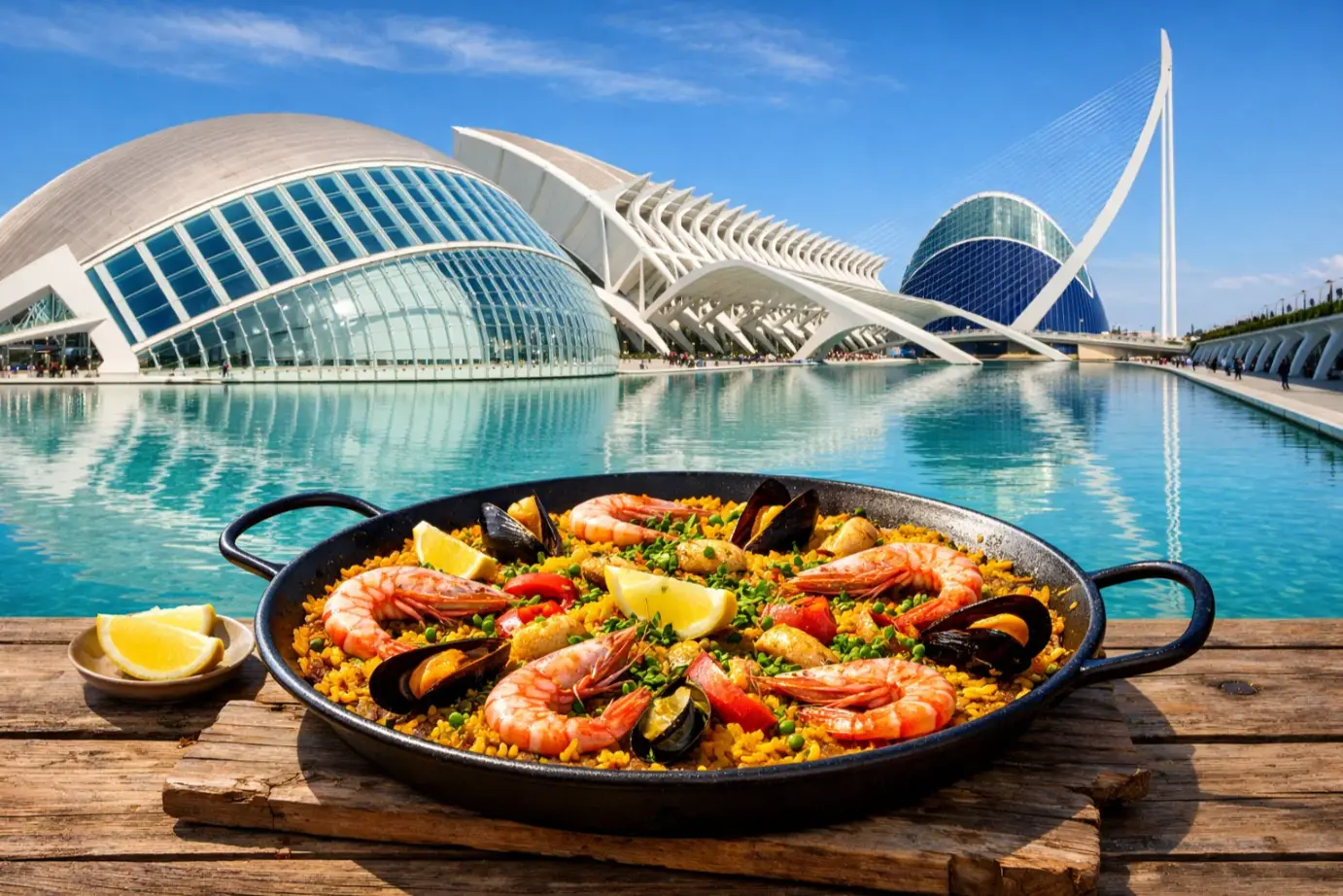
Valencia is frequently described as the most livable city in Spain, and it is easy to see why it appears on so many first-timer recommendation lists. Located on the Mediterranean coast, it offers a compelling mix of ancient history and contemporary design without the overwhelming tourist pressure of Barcelona or Madrid. Valencia is the birthplace of paella, and tasting an authentic version here, made with locally grown saffron-infused rice, fresh seafood, and rabbit or chicken, is a genuinely different experience from anything served abroad under that name.
Key Attractions in Valencia
The City of Arts and Sciences is a futuristic complex of museums, an oceanarium, and an IMAX cinema designed by architect Santiago Calatrava, and it is one of the most striking pieces of contemporary architecture anywhere in Europe. The Valencia Cathedral, which many historians believe contains the Holy Grail, and the Central Market, a stunning modernist building housing hundreds of food stalls, are essential stops in the old town. Valencia’s beaches are also among the most easily accessible of any major European city.
6. Toledo: A Living Museum of Three Religions
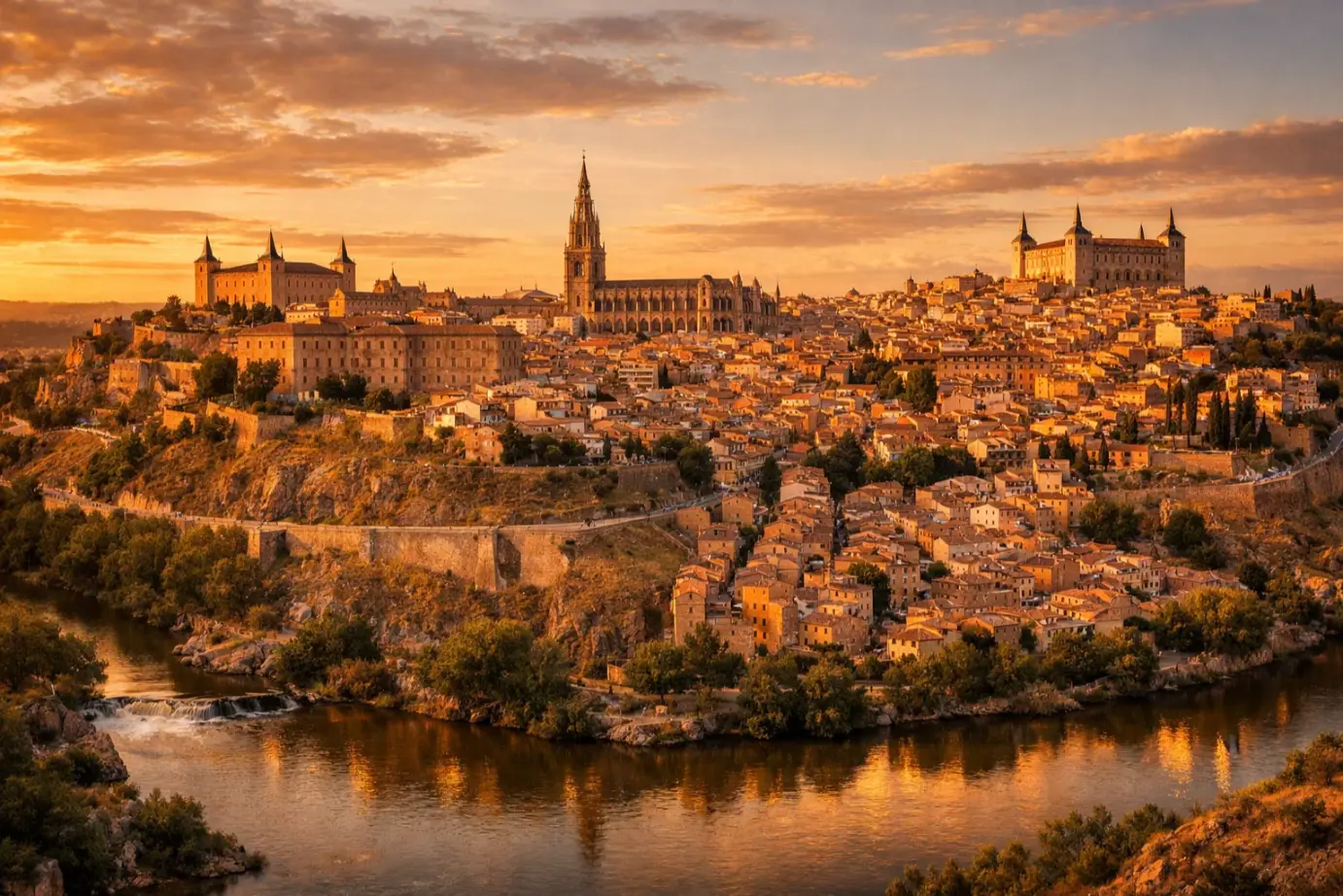
Just 30 minutes from Madrid by high-speed train, Toledo is one of the most historically significant and most underrated destinations in Spain. Perched dramatically on a granite hill above the Tagus River, the city was once the capital of the Spanish empire and served for centuries as a meeting point of Christian, Muslim, and Jewish cultures. This multicultural heritage is still visible in its architecture, where Gothic cathedrals, mosques-turned-churches, and medieval synagogues stand within a few hundred meters of each other.
Toledo is best explored on foot, wandering its steep cobblestone streets and stumbling across ancient monuments at every turn. The Toledo Cathedral is among the finest examples of Spanish Gothic architecture. The El Greco Museum pays tribute to the great Renaissance painter who spent much of his career in the city. Toledo makes an ideal day trip from Madrid, but staying overnight allows you to experience the old city after the day-trippers have left, which transforms the atmosphere entirely.
7. San Sebastian: Spain’s Culinary Capital on the Bay of Biscay
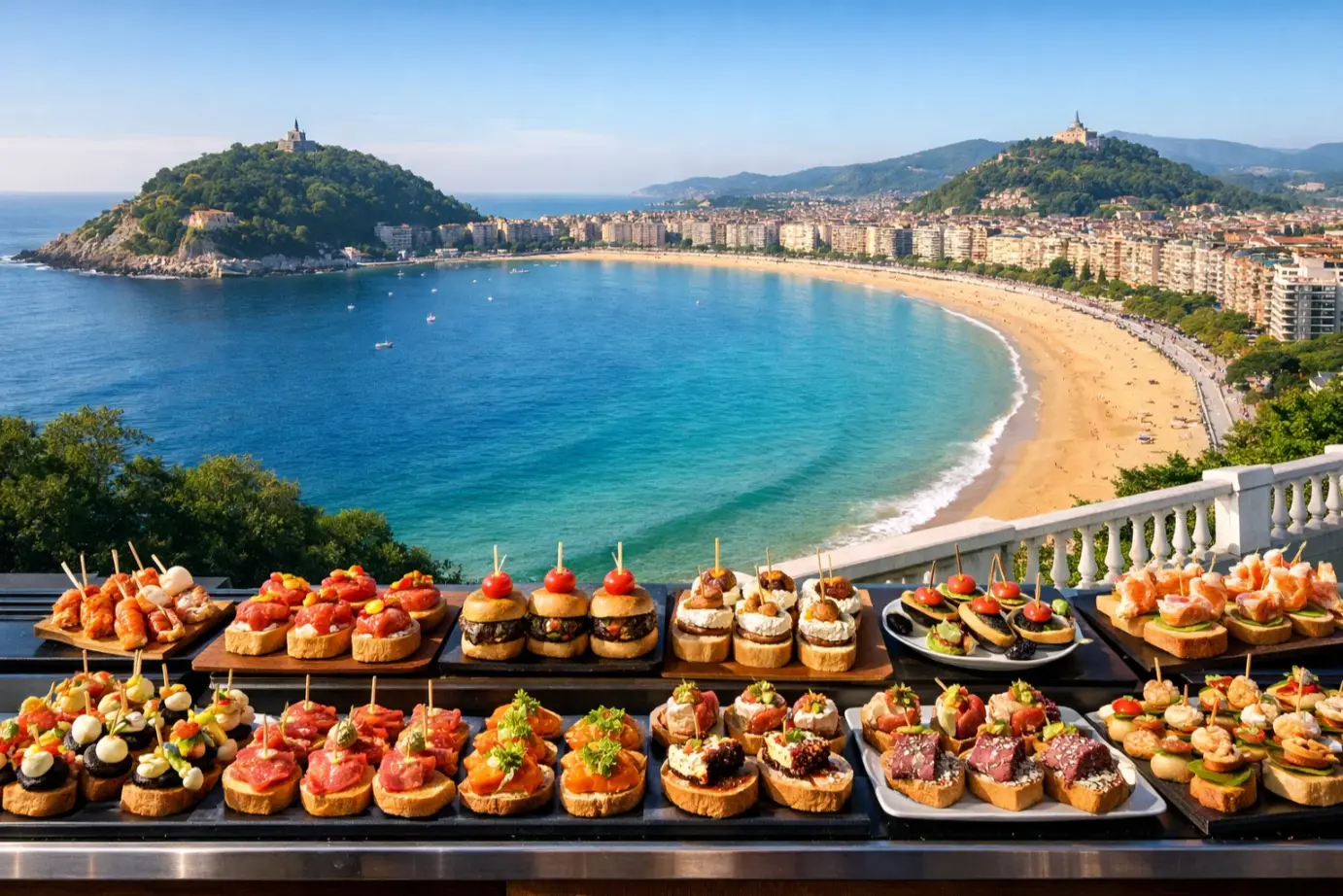
San Sebastian, known in the Basque language as Donostia, is one of the most beautiful small cities in Europe and one of the most celebrated food destinations in the world. Situated in the Basque Country on the northern coast, it curves around the perfect shell of La Concha Bay, flanked by wooded hills and a pristine sandy beach that would not look out of place on a tropical island. The combination of dramatic natural scenery and extraordinary culinary culture makes San Sebastian a bucket list destination in its own right.
Pintxos Culture and Beaches in San Sebastian
The Parte Vieja, or old town, is densely packed with pintxos bars where an evening of bar-hopping through small plates of impossibly crafted bites is the standard way to dine. San Sebastian has more Michelin stars per capita than almost anywhere else on Earth, but the real magic is found in unpretentious bars where a perfectly seasoned crab pintxo costs less than two euros. The city is particularly beautiful in early autumn when the summer crowds have thinned but the weather remains warm and the sea is still swimmable.
8. Costa del Sol: Sun, Sea, and Southern Spanish Life
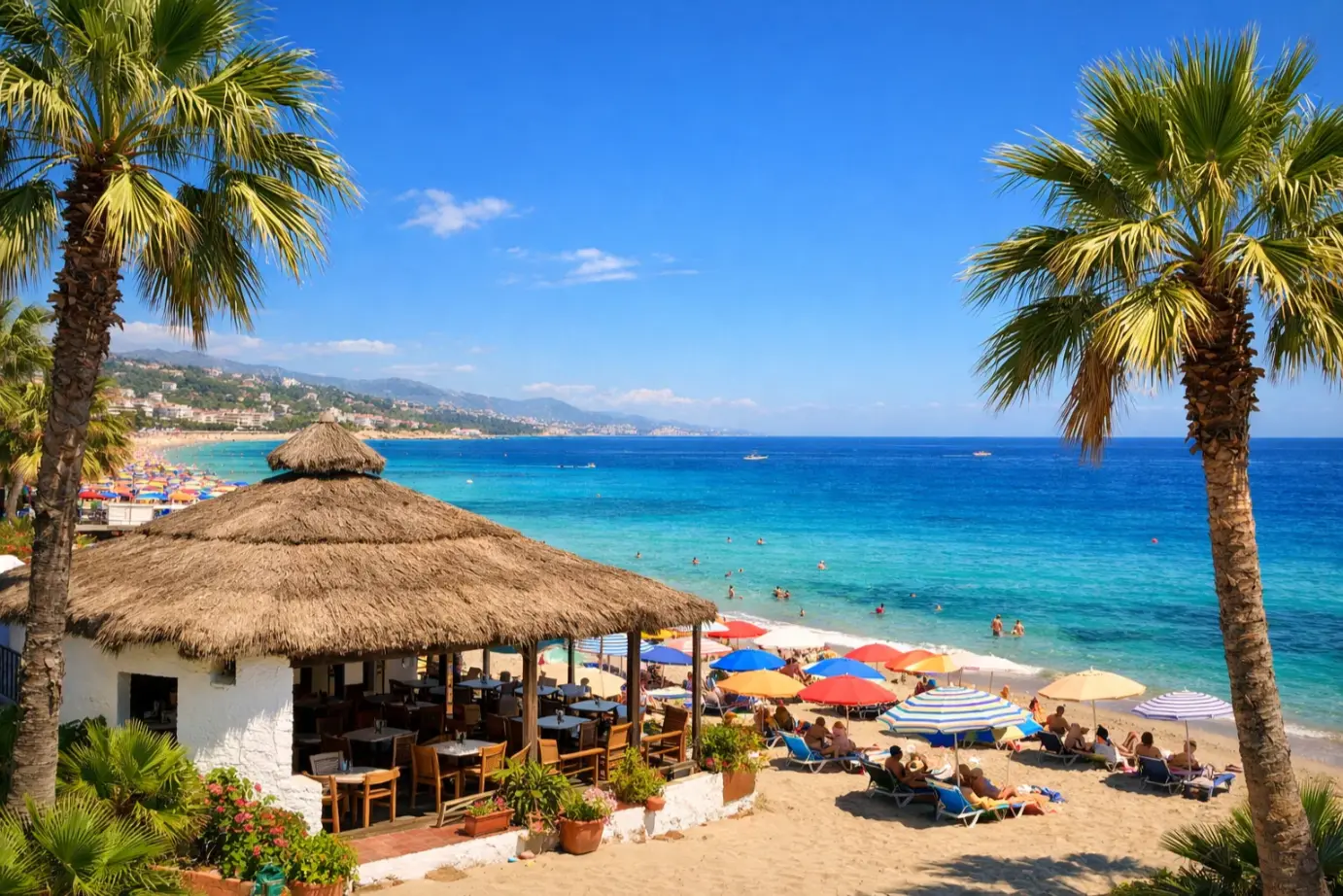
For first-time visitors primarily seeking sun, sand, and the relaxed rhythm of coastal Spanish life, the Costa del Sol in southern Andalusia delivers everything the name promises. Stretching along the Mediterranean coastline of Malaga province, the region encompasses dozens of beach towns ranging from the glamorous resort of Marbella to the charming fishing village of Nerja, where a clifftop viewpoint called the Balcony of Europe offers sweeping views over the sea.
Malaga and Day Trips from the Costa del Sol
Malaga itself is worth several days as a city, not simply as a transit point. It is the birthplace of Pablo Picasso, and the Picasso Museum there houses an impressive collection of his work. The historic old town, with its Roman theater, medieval Alcazaba fortress, and lively tapas scene, provides a satisfying balance of culture and leisure. The Costa del Sol also serves as a convenient base for day trips to Gibraltar, the white hilltop town of Ronda, and the Caminito del Rey, a spectacular mountain pathway above a dramatic gorge.
9. Cordoba: The City of the Great Mosque and Flowering Courtyards
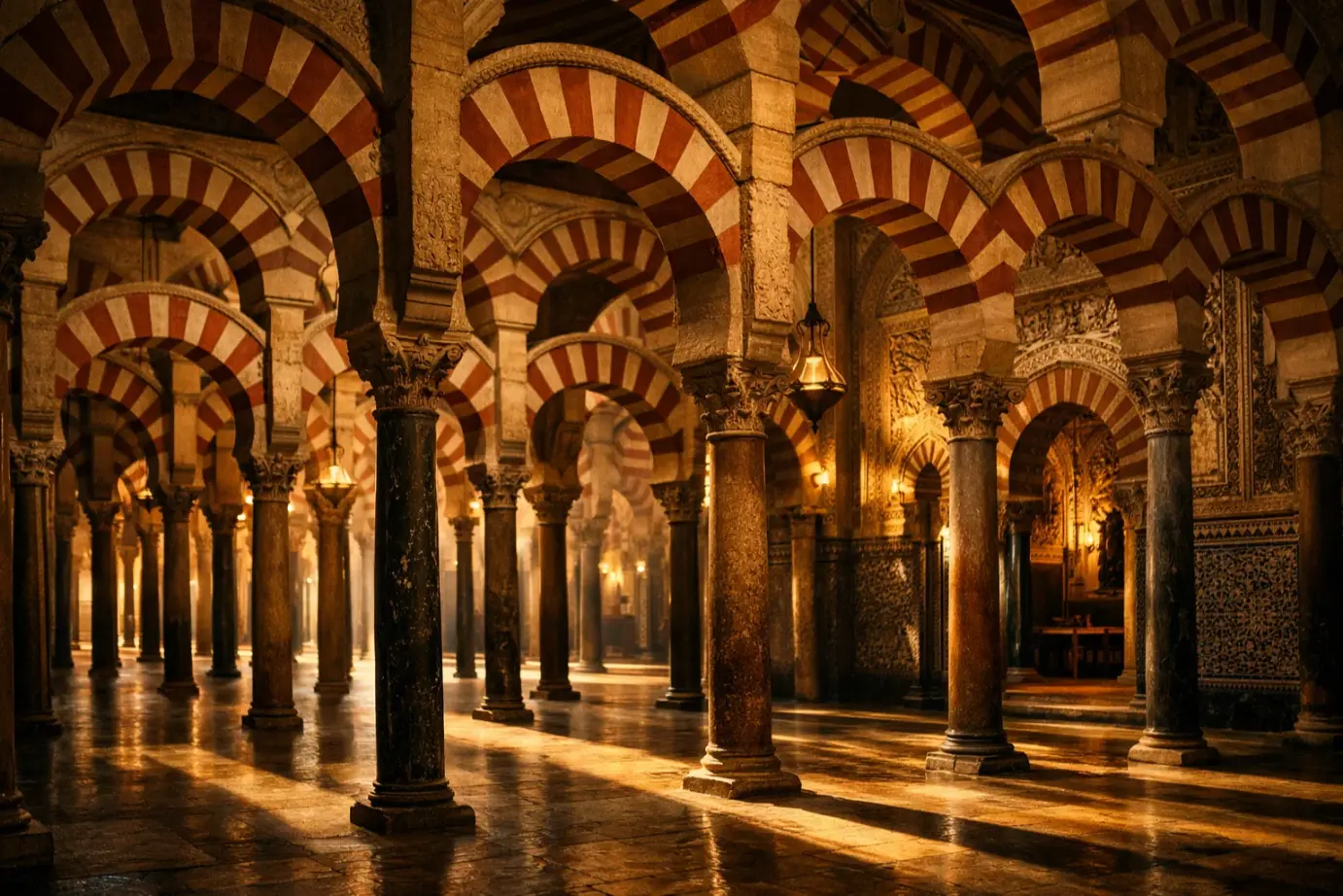
Cordoba is one of those cities that leaves a lasting impression out of all proportion to its size. During the 10th century it was the most populated city in Europe, a center of Islamic scholarship, art, and architecture with no equal in the Western world. The legacy of that era is the Mezquita-Catedral, a building that begins as a Roman temple, becomes a great mosque, and then has a full Gothic cathedral inserted into its very center. The result is one of the most architecturally fascinating structures anywhere in the world and the most visited monument in Andalusia after the Alhambra.
The Mezquita and the Patio Festival
Beyond the Mezquita, Cordoba is known for its Jewish Quarter, a labyrinthine network of whitewashed alleys that open unexpectedly onto flower-filled patios. Each May, Cordoba holds its Festival de los Patios, during which private courtyards are opened to the public and compete for the title of most beautifully decorated. Even outside the festival season, the patios are a defining feature of the city’s domestic architecture and a genuine pleasure to discover. Cordoba is easily reached from Seville or Madrid by the AVE train, making it a natural addition to any Andalusian itinerary.
10. Mallorca: The Jewel of the Balearic Islands
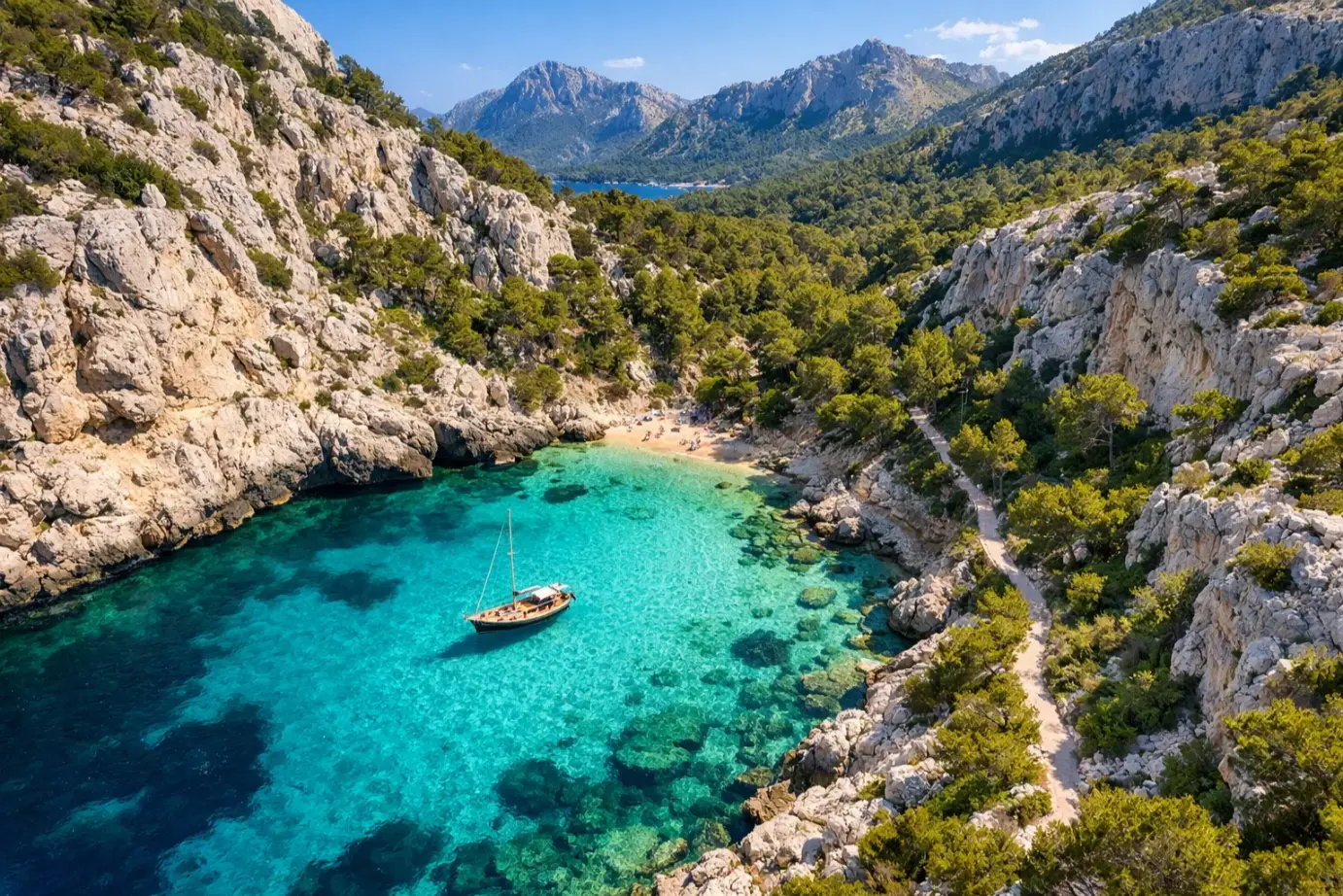
Rounding out this Spain travel guide is the largest of the Balearic Islands, a destination that manages to be simultaneously one of the most visited places in Spain and one of the most quietly beautiful. Mallorca is often associated with package tourism and crowded beach resorts, and while those certainly exist, they represent only a fraction of what the island has to offer. The Serra de Tramuntana mountain range along the northwestern coast is a UNESCO World Heritage Site of extraordinary natural beauty, with limestone peaks dropping dramatically into the blue Mediterranean below.
Discovering the Best of Mallorca
The capital Palma de Mallorca is a genuinely sophisticated city with a stunning Gothic cathedral known as La Seu that rises directly from the waterfront, an excellent contemporary art museum, and a charming old town full of Renaissance palaces. The inland villages of Valldemossa, Deia, and Soller offer a peaceful alternative to the coastal resorts, with stone houses, olive groves, and mountain views that feel a world away from the party beaches of the south. Mallorca rewards those who rent a car and explore independently, following coastal roads that reveal hidden coves accessible only on foot through pine forest.
Essential Spain Travel Tips for First-Time Visitors
Getting around Spain is straightforward once you understand the infrastructure. The AVE high-speed train network connects Madrid to Barcelona, Seville, Valencia, and Cordoba in under three hours. For reaching the islands, domestic flights are quick and often inexpensive when booked in advance. Within cities, the metros in Madrid and Barcelona are clean, reliable, and easy to navigate.
Spanish meal times operate on a schedule that surprises many visitors. Lunch is the main meal of the day and typically begins around 2:00 PM. Dinner rarely starts before 9:00 PM and can stretch well past midnight. Attempting to eat dinner at 6:00 PM will result in finding most restaurants either closed or empty. Embracing the local schedule is part of the experience and will serve you well throughout your trip.
Citizens of the United States, Canada, the United Kingdom, and most European Union countries do not require a visa for stays of up to 90 days. The euro is the official currency. Tipping is appreciated but not obligatory, and rounding up or leaving small change is the common practice. Learning a handful of basic Spanish phrases will earn you genuine goodwill from locals even in tourist-heavy cities where English is widely spoken.
Conclusion
Spain is not a destination you visit once and consider finished. It is a country that draws people back repeatedly because each return reveals something new. For first-time visitors, the 10 destinations in this Spain travel guide offer the most complete and satisfying introduction to everything the country has to offer.
Begin with Barcelona or Madrid if you want the full-throttle city experience. Head south to Seville, Granada, and Cordoba if the Moorish heritage and flamenco culture speak to you. Choose Valencia for a relaxed coastal introduction with outstanding food. Add San Sebastian if you are serious about eating extraordinarily well. Visit Mallorca or the Costa del Sol for natural beauty and a change of pace. Whatever combination you choose, Spain will meet you with warmth, beauty, and an invitation to slow down and live more fully. Book your tickets early for the most popular sites, and prepare for a trip that will set the standard for every travel experience that follows.
You may also like this post: 15 Hidden Gems in Oklahoma for First-Timers
Frequently Asked Questions
1. What is the best time of year to visit Spain for the first time?
Spring from late March through May and autumn from September through November offer the most pleasant travel conditions. Temperatures are comfortable across most of the country, crowds at major attractions are more manageable than in summer, and prices for flights and accommodation are generally lower. Summer is ideal for beach destinations but can be extremely hot in interior cities like Seville and Madrid, where temperatures regularly exceed 40 degrees Celsius in July and August.
2. How many days do I need for a first trip to Spain?
A minimum of 10 to 14 days is recommended if you want to see more than one or two cities. A 10-day itinerary could comfortably include Madrid, Toledo, Seville, Granada, and Barcelona with the help of the AVE train network. For a more relaxed experience that includes a coastal destination or one of the islands, two weeks is the ideal starting point. Spain rewards slower travel, and rushing through too many cities in a short time reduces the quality of the experience considerably.
3. Is Spain expensive to travel in?
Spain is one of the more affordable countries in Western Europe, though costs vary by region and city. Barcelona and Madrid are the most expensive for accommodation and dining. Cities like Granada, Valencia, and Cordoba offer excellent value, and smaller towns are even more budget-friendly. A daily budget of 80 to 120 euros per person covering accommodation, meals, and local transport is realistic for a comfortable mid-range trip in most Spanish cities outside of peak season.
4. Do I need to speak Spanish to travel in Spain?
English is widely spoken in tourist areas, hotels, and restaurants in major cities. In smaller towns and rural areas, Spanish becomes essential for basic navigation. Learning a few key phrases covering greetings, ordering food, asking for directions, and expressing thanks will dramatically improve your interactions with locals and will be genuinely appreciated. In Barcelona, some locals prefer Catalan, though Spanish is universally understood throughout the city.
5. What Spanish foods should every first-time visitor try?
Paella in Valencia is a non-negotiable starting point. Tapas in Seville and throughout Andalusia offer a way to sample multiple flavors in a single sitting. Pintxos in San Sebastian represent some of the most inventive small-plate cooking in the world. Jamon Iberico, Spain’s prized cured ham, is best appreciated when bought from a proper delicatessen rather than a tourist shop. Churros con chocolate as a morning treat, patatas bravas at any bar, and fresh seafood along any coastline round out the essential Spanish food experience.