

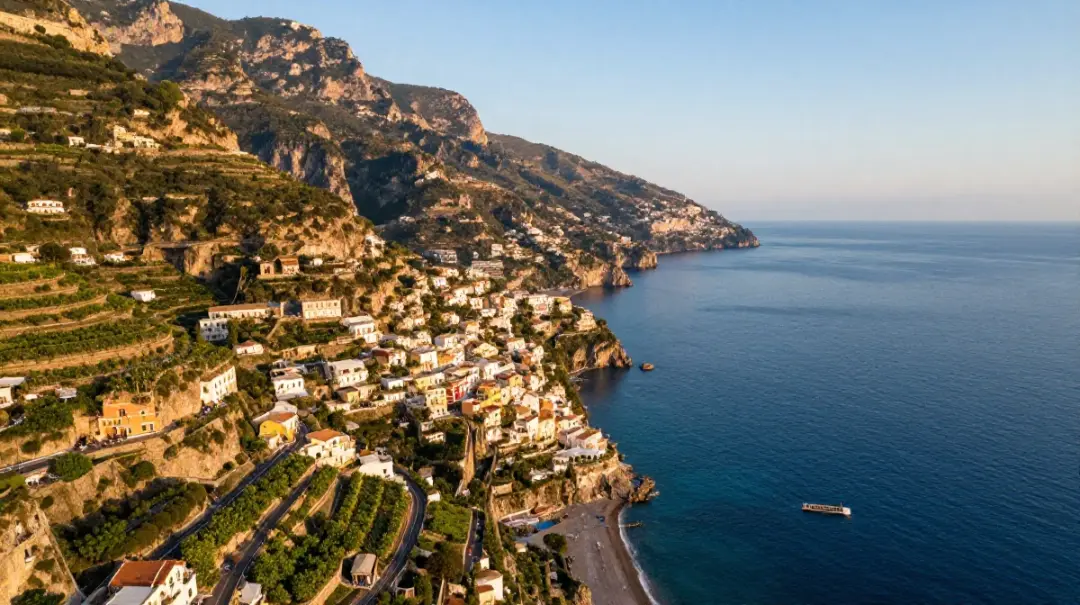
There are destinations in this world that exist beyond the reach of photographs and travel writing. No image quite captures the way afternoon light falls across the cliffside houses of Positano, and no sentence fully prepares you for standing at the edge of Ravello’s Terrace of Infinity with the Tyrrhenian Sea sprawling endlessly below. The Amalfi Coast is one of those places. Officially known as the Costiera Amalfitana, this 50-kilometer stretch of coastline along the southern edge of Italy’s Sorrentino Peninsula has been a UNESCO World Heritage Site since 1997, and for good reason.
The combination of dramatic limestone cliffs, medieval hilltop villages, crystalline water, lemon groves, and centuries of layered history makes it unlike anywhere else in Europe. Five days is the sweet spot for a first visit, and this Amalfi Coast itinerary is built around exactly that. It gives you enough time to breathe, to linger over a long lunch, to take a wrong turn down a beautiful alley and not panic about the schedule.
This Amalfi Coast itinerary covers 15 of the most important and rewarding places and experiences the coast has to offer, spread across five thoughtfully structured days. From the gateway town of Sorrento to the ancient ruins of Pompeii, from the sea caves of Capri to the terraced gardens above Ravello, every stop on this Amalfi Coast itinerary earns its place.
Day 1: Sorrento
Place 1: Sorrento Old Town and Piazza Tasso

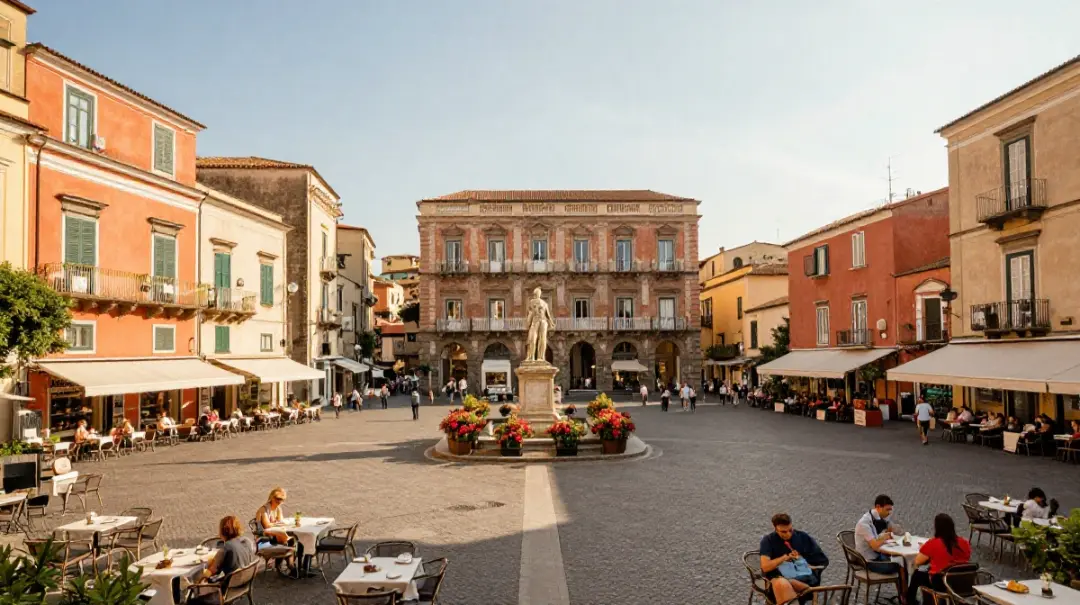
Sorrento is where almost every Amalfi Coast journey begins, and it rewards time spent well beyond a single afternoon. The Old Town sits on a natural terrace above the sea, and its character is immediately distinct from the more polished, tourist-facing towns further along the coast. The streets here are narrow, covered in places by stone arches, and lined with small family-run shops selling locally produced limoncello, handmade ceramics, and the inlaid woodwork known as intarsia that Sorrento has been famous for since the 18th century.
Piazza Tasso is the pulsing heart of the town, a wide, sun-drenched square named after the Renaissance poet Torquato Tasso who was born here in 1544. In the early morning it belongs almost entirely to locals gathering for their first espresso of the day. By afternoon it is alive with the full mix of residents and visitors, street musicians, and the constant background hum of motor scooters navigating the surrounding lanes. Sitting at one of the outdoor cafes here with a coffee and watching the square go about its business is one of the simplest and most satisfying things you can do on the entire coast.
The Old Town to the west of Piazza Tasso is best explored on foot with no particular agenda. The shopping streets are genuinely pleasant even if you have no intention of buying anything, and the residential alleys beyond them offer a more authentic glimpse of daily life in a southern Italian coastal town.
Place 2: Church of San Francesco and Its Cloister
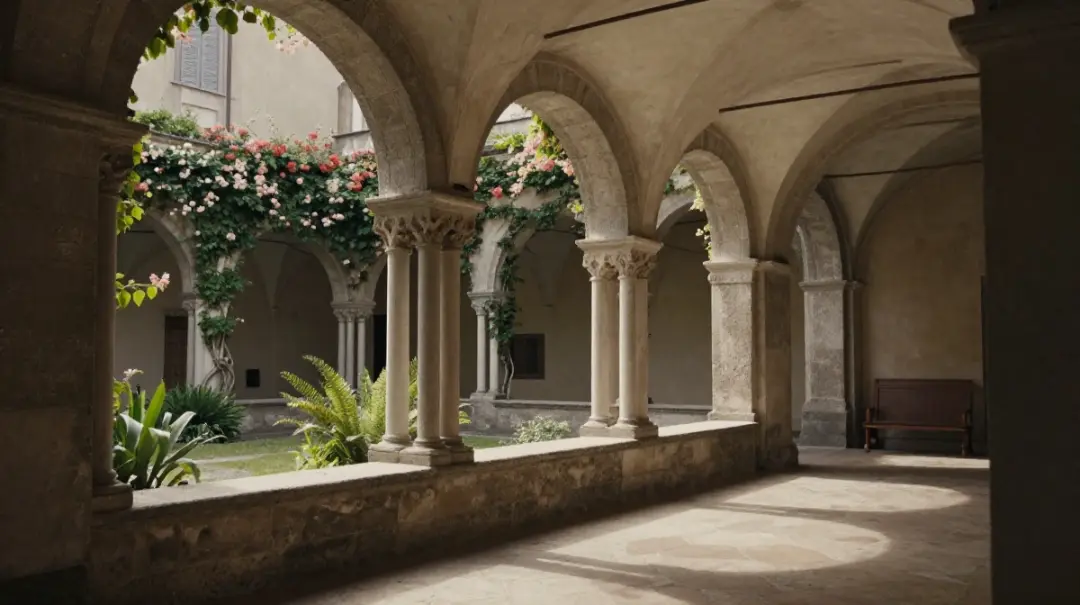
A short walk from the main square, the Church of San Francesco is one of the most quietly beautiful spots in Sorrento. The church itself dates to the 14th century, though the site has been associated with Franciscan religious life for much longer. The interior is pleasant but it is the cloister beside the church that genuinely stops visitors in their tracks.
This small, intimate courtyard is a masterpiece of modest medieval architecture, featuring a series of interlaced arches supported by slender octagonal columns and rounded Roman columns alternating in pairs. Flowering plants climb the walls and spill over the stonework, and the overall effect in the late morning, when the light is soft and the courtyard is peaceful, is one of profound calm.
The cloister is also used in the summer months as an open-air venue for classical music concerts, making it worth checking the schedule when you visit. Even without a performance, spending twenty or thirty minutes here before the day crowds arrive is a genuine highlight of any visit to Sorrento.
Place 3: Vallone dei Mulini
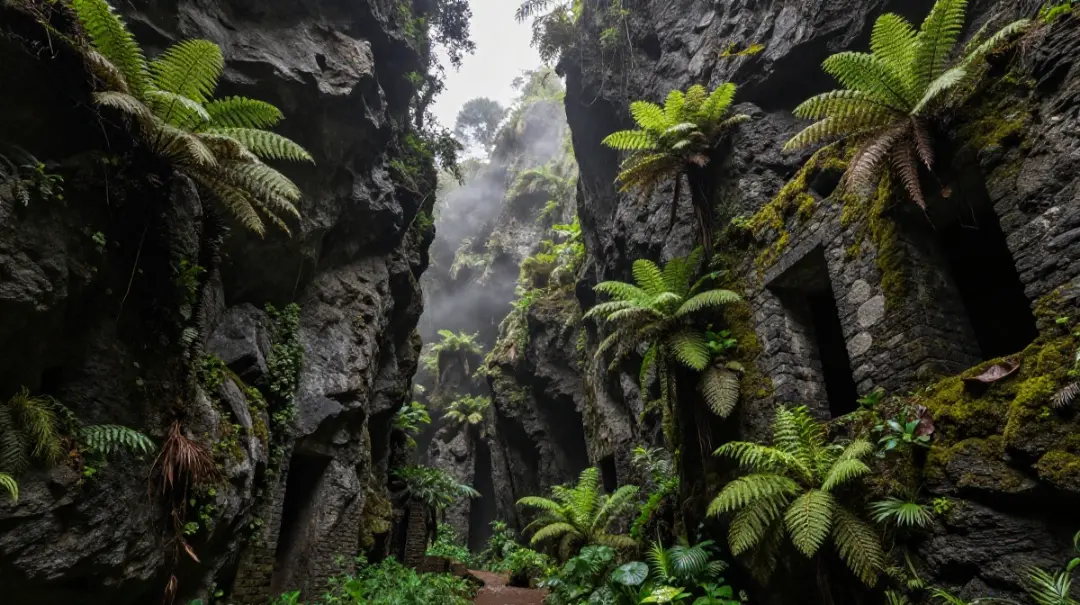
One of the most surprising sights in all of Sorrento requires no travel at all — it sits right in the middle of the town, hidden in plain sight. The Vallone dei Mulini, which translates roughly as the Valley of the Mills, is a deep natural ravine carved into the volcanic rock by ancient water erosion, and it drops sharply away from the edge of a viewing platform near the center of town.
At the bottom of the gorge, almost entirely swallowed by dense subtropical vegetation that thrives in the humid microclimate below, sit the ruins of a medieval grain mill that operated here until the early 20th century when the construction of a nearby road altered the natural drainage and the gorge became too damp to use.
What makes the Vallone dei Mulini so compelling is the contrast between its setting and its surroundings. You are standing in a busy tourist town, shops and restaurants on all sides, and directly below you is something that looks like the set of an adventure film — ancient stone walls consumed by ferns and moss, a ruined structure slowly returning to the earth, and absolute stillness in a place surrounded by noise. It is one of those unexpected moments that the Amalfi Coast delivers again and again.
Day 2: Positano
Place 4: Positano Village and Spiaggia Grande
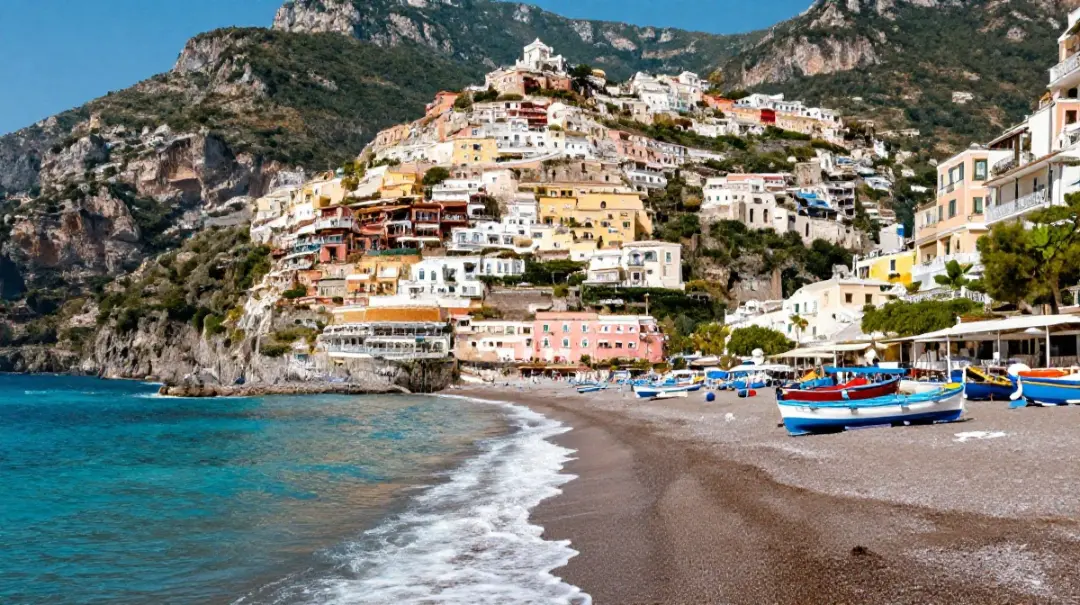
Positano is the face of the Amalfi Coast. It is the image that appears on every poster, every travel magazine cover, every Instagram account devoted to southern Italy — the cascade of pastel-colored houses tumbling down a near-vertical hillside directly to the sea. And the remarkable thing is that it looks exactly like the photographs, and yet the photographs still fail to convey what it actually feels like to stand in the middle of it.
The town is built almost entirely on steps. There are very few flat surfaces in Positano, which means that exploring it involves a constant negotiation with gravity, but the reward at every level is another extraordinary view either up into the cliffs above or down across the rooftops to the sea below.
The main beach, Spiaggia Grande, is a wide crescent of dark grey sand and smooth pebbles at the foot of the town. It is serviced by a row of beach clubs offering sunbeds, umbrellas, food, and drinks for a fee, but a section of free public beach is always available. The water here is clear and calm in the morning, and swimming with the cliffside town rising above you is one of those experiences that you replay in your mind for years afterward.
The streets leading down to the beach are lined with some of the finest boutique shopping on the coast, including the famous handmade leather sandal workshops that Positano has been known for since the 1960s when it first became a destination for artists and writers escaping the mainstream.
Place 5: Church of Santa Maria Assunta
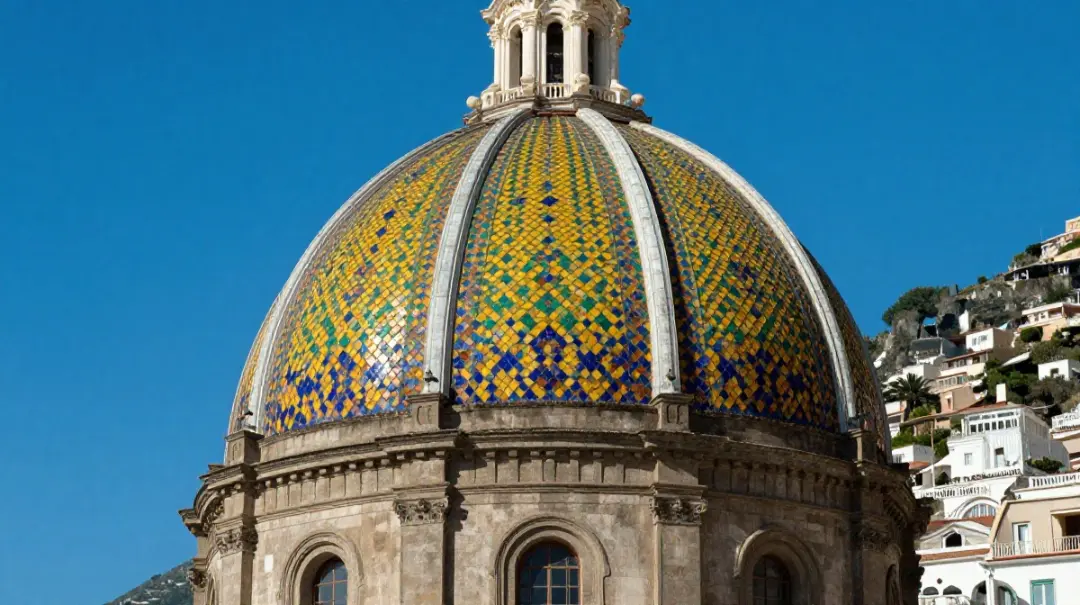
Perched just above the main beach in the very center of Positano, the Church of Santa Maria Assunta is the defining landmark of the town. Its majolica-tiled dome, decorated in vivid yellow, green, and blue ceramic tiles, is visible from virtually every point in Positano and from the sea approaching by ferry. The dome has become so synonymous with the town that it functions almost as a logo, appearing on everything from postcards to ceramic plates sold in the shops below.
The interior of the church is far more intimate than its prominent exterior suggests. The most significant object inside is a Byzantine icon of the Black Madonna, dating to the 13th century, which according to local tradition was being transported by ship when a severe storm threatened to sink the vessel. The sailors heard a voice commanding them to put in to shore at Positano, which they did, and the icon was installed in the church that was built to honor the miracle. The painting has been at the heart of the town’s religious and cultural identity ever since, and the feast of the Assumption on August 15th remains the most important celebration in the Positano calendar.
Visiting the church early in the morning before the tour groups arrive gives you the chance to appreciate it in genuine peace.
Place 6: Path of the Gods (Sentiero degli Dei)
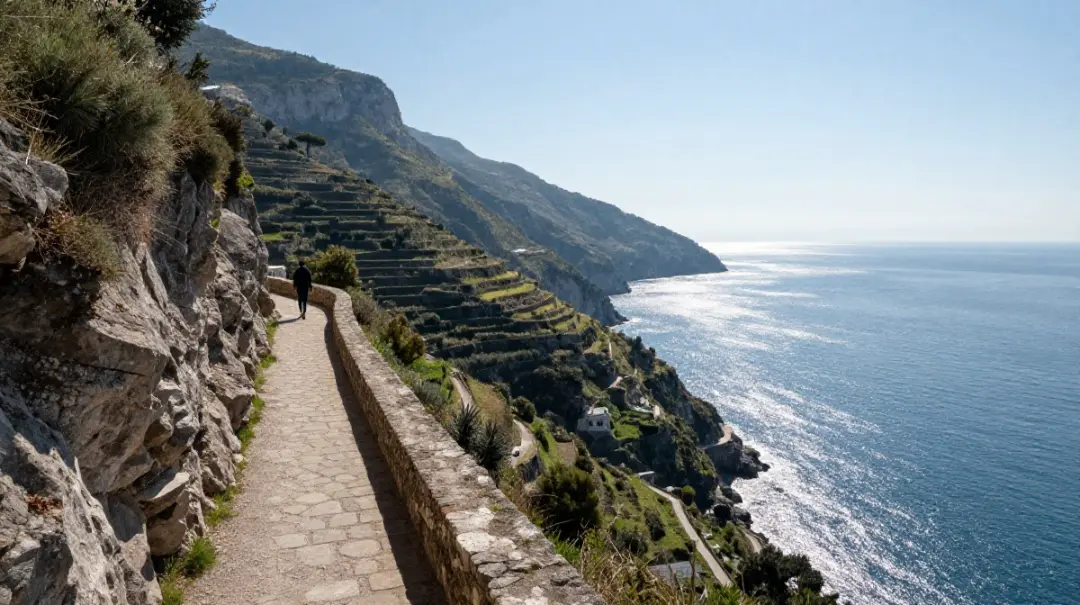
For those with even a moderate level of fitness, the Path of the Gods is the single most rewarding physical experience the Amalfi Coast offers. This ancient trail, which follows routes originally used by mule caravans connecting the hilltop communities of the interior with the coastal towns below, runs along the high ridge above Positano with views of the coast that are simply incomparable. The name is not an exaggeration. When you are walking along the cliff edge with the Tyrrhenian Sea 500 meters below you on one side and the terraced hillsides rising above you on the other, the scale of the landscape makes ordinary life feel very far away.
The most popular section of the trail runs from the village of Bomerano, accessible by bus from Amalfi, down to the village of Nocelle just above Positano, covering approximately eight kilometers with a significant descent in the second half. The walk takes between three and four hours at a comfortable pace. Starting from Bomerano in the morning allows you to arrive in Nocelle by early afternoon, from where local buses or a long staircase descend to Positano. The trail is well-marked and requires no technical equipment beyond good walking shoes, but it is not suitable for very young children or anyone uncomfortable with exposed heights.
Day 3: Capri
Place 7: The Blue Grotto (Grotta Azzurra)
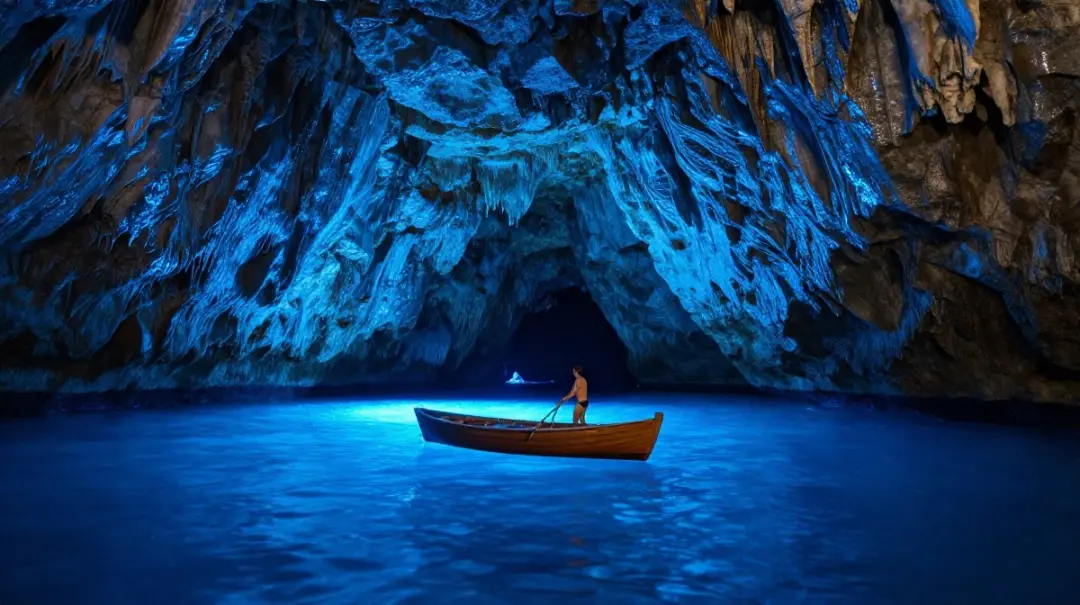
The Blue Grotto is one of the most famous natural wonders in Italy, and it has been drawing visitors to the northern shore of Capri since the 1820s when German writer August Kopisch re-popularized knowledge of the cave to the wider world. The grotto is a sea cave approximately 60 meters long, accessible only by small wooden rowboats that must pass through a low arched entrance — visitors lie flat in the boat as it is pulled through. Inside, the effect is otherworldly.
Natural light enters through an underwater opening approximately two meters below the surface, and as it passes through the water it is filtered to a brilliant, electric blue that illuminates the entire interior of the cave from below. The water glows. The walls and ceiling catch the reflected light and shimmer. It is one of those experiences where the word magical is not an overstatement.
Access to the Blue Grotto requires calm sea conditions, and it is sometimes closed due to high waves, so it is worth checking in advance and planning your day to visit as early as possible. The boat ride from the main Marina Grande harbor takes about 20 minutes each way.
Place 8: The Faraglioni Rocks and Boat Tour
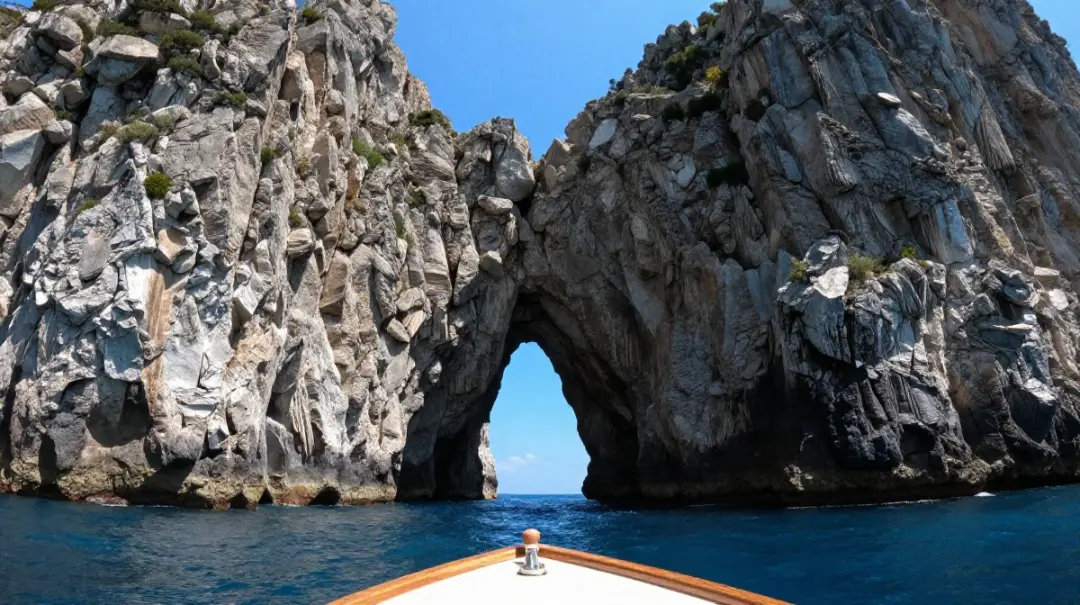
Three towering limestone stacks rise from the sea off the southeastern tip of Capri, and they have become as iconic to the island as the Blue Grotto. The Faraglioni — named Stella, Faraglione di Mezzo, and Faraglione di Terra — were formed by centuries of wave erosion eating away at the softer rock of the original cliff face, leaving only the hardest limestone pillars standing. The largest stands over 100 meters above the water. A rare species of blue lizard found nowhere else on earth lives on the outermost rock.
The best way to experience the Faraglioni is from the water on a boat tour around the island. These tours depart from Marina Grande throughout the day and typically last between one and three hours depending on the route. The highlight for most passengers is passing through the natural arch in the base of the middle Faraglione, a low tunnel through which the boat glides while passengers look up at the rock walls on either side. The boat tour also takes you past the Villa Malaparte, a striking modernist villa built into a cliff face on the eastern coast, and around to the rugged natural rock formations of the western shore.
Place 9: Monte Solaro and Anacapri
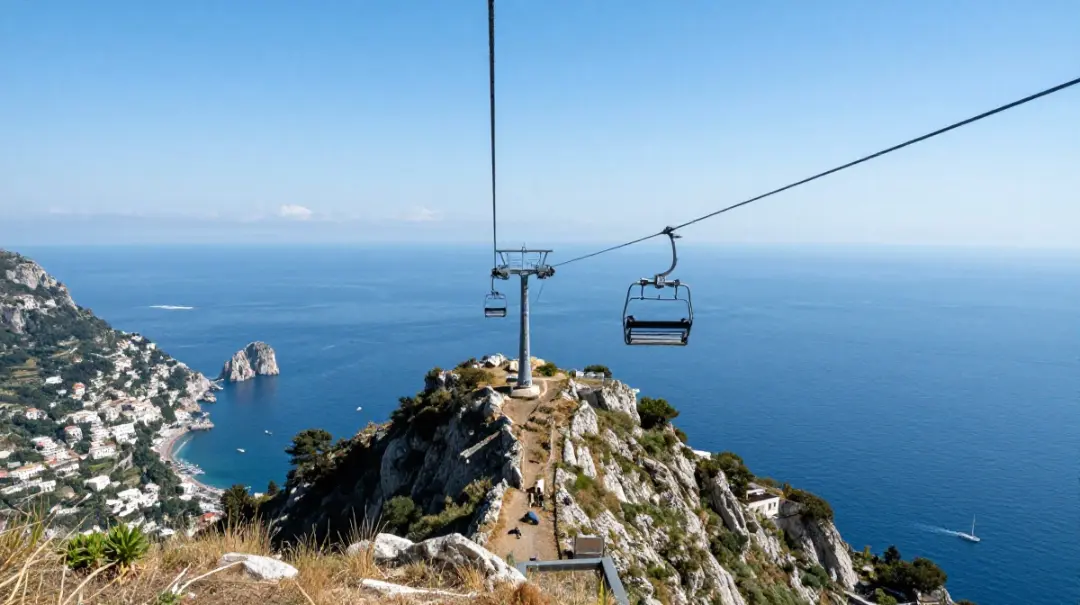
The town of Anacapri sits on the upper plateau of the island, away from the crowds that concentrate around Capri town at sea level, and has a distinctly different atmosphere — quieter, greener, and more village-like. From Anacapri, a single-seat open-air chairlift carries visitors to the summit of Monte Solaro, the highest point on the island at 589 meters above sea level.
The chairlift ride takes about twelve minutes each way and the views from the summit on a clear day are among the finest in the entire Bay of Naples. The Amalfi Coast stretches away to the east, the islands of Ischia and Procida are visible to the north, and on exceptionally clear days the coastline of Calabria is visible to the south.
At the summit there is a small café and terrace from which to take in the panorama before the descent. The combination of the Anacapri village, the chairlift, and the summit views makes for a half-day that feels complete and deeply satisfying — a different side of Capri from the glamour of the main town.
Day 4: Amalfi Town and Ravello
Place 10: Amalfi Cathedral (Cattedrale di Sant’Andrea)
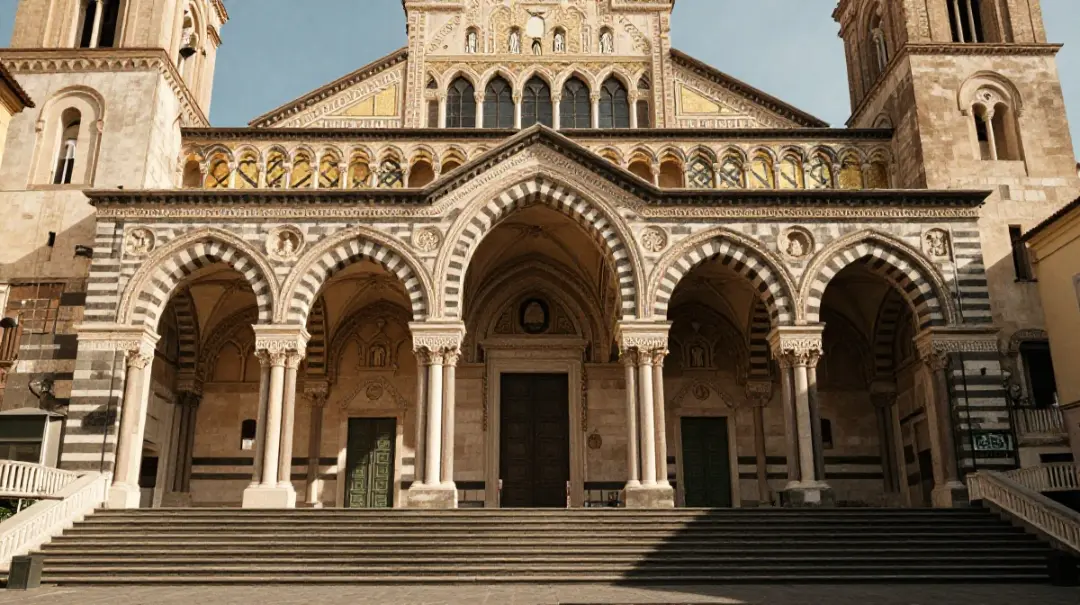
The town of Amalfi was, from the 9th to the 11th century, one of the most powerful maritime republics in the Mediterranean world. At its peak it rivaled Venice, Genoa, and Pisa as a center of trade and naval power, and the cathedral that rises above the main piazza is the most tangible expression of that former greatness. The Cattedrale di Sant’Andrea, dedicated to Saint Andrew the Apostle whose relics are preserved in the crypt below, was originally constructed in the 9th century and has been expanded and modified many times since.
The facade that faces Piazza del Duomo today is a dramatic 19th-century reconstruction in the Arab-Norman Romanesque style, featuring interlaced pointed arches, geometric mosaic panels, and a central bronze door cast in Constantinople in 1066.
The interior opens into a space that blends several centuries of architectural thinking, from the original medieval structure to Baroque embellishments added in the 17th and 18th centuries. The crypt contains not only the tomb of Saint Andrew but also a remarkable collection of ancient marble columns, sculptures, and religious artworks accumulated over the cathedral’s long history. Climbing the 57 steps of the external staircase to reach the entrance is itself a moment worth savoring — the view across the piazza and down to the harbor from the top of those steps is one of the finest in the town.
Place 11: Old Arsenal Museum (Arsenale della Repubblica)
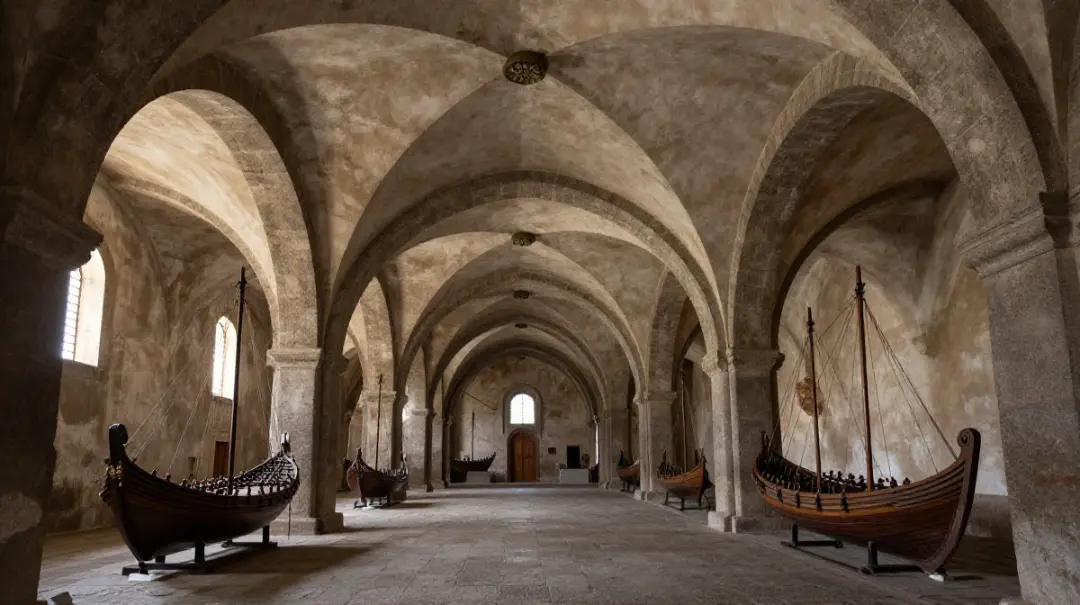
Just a short walk from the cathedral, tucked into the base of the cliff at the edge of the harbor, the Arsenale della Repubblica is one of the most historically significant and least-visited sites in Amalfi. This medieval shipyard, built in the 11th and 12th centuries during the height of Amalfi’s maritime power, was where the galleys of the Amalfitan fleet were constructed and maintained. The building itself is extraordinary — a series of massive pointed stone arches spanning the vaulted interior, their scale reflecting the size of the warships that were once built beneath them.
Today the space houses a maritime museum that tells the story of the Amalfi Republic through maps, charts, navigational instruments, and scale models of medieval ships. Most significantly for the history of global exploration, the museum honors Amalfi’s contribution to the development of the mariner’s compass, which many historians credit to Amalfitan inventor Flavio Gioia in the early 14th century. Spending an hour here puts the entire coastline in a richer historical context and helps you understand why this small town on a clifftop was once among the most important cities in the western world.
Place 12: Villa Rufolo, Ravello
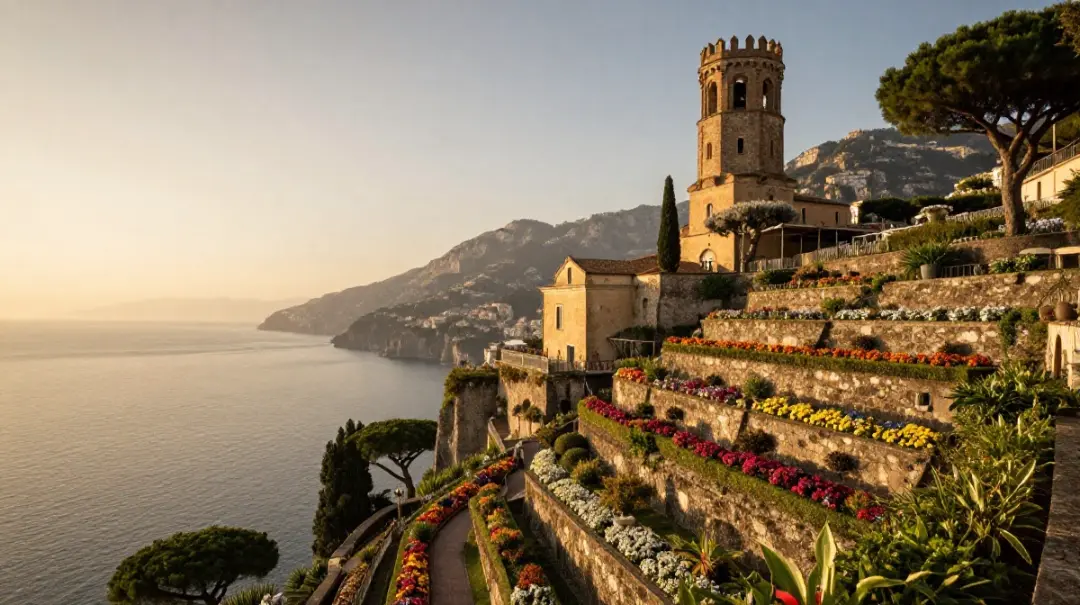
From Amalfi, the bus climbs steeply up a series of hairpin bends to reach Ravello, a hilltop town perched at roughly 350 meters above sea level with a completely different character from the coastal towns below. Where Positano and Amalfi are busy and colorful and saturated with tourists in the summer months, Ravello is measured, elegant, and quiet. It has attracted artists, musicians, and writers for centuries — D.H. Lawrence, Virginia Woolf, and Gore Vidal all lived or spent significant time here.
Villa Rufolo sits at the heart of Ravello, just steps from the main piazza, and it is the town’s most historically important landmark. Built in the 13th century by the powerful Rufolo family, the villa’s tower and palace are fine examples of the Arab-Norman architecture that flourished in southern Italy under Norman rule. But it is the gardens that draw most visitors. Planted on a series of terraces carved into the cliff edge, the gardens look directly out over the coast with views that extend for many kilometers in both directions.
Richard Wagner visited in 1880 and was so moved by the setting that he declared it the inspiration for the magical garden of Klingsor in his opera Parsifal. The Ravello Music Festival, held each summer in an outdoor stage built on the villa’s terraces, celebrates that connection with performances that take advantage of the most dramatic backdrop imaginable.
Place 13: Villa Cimbrone and the Terrace of Infinity
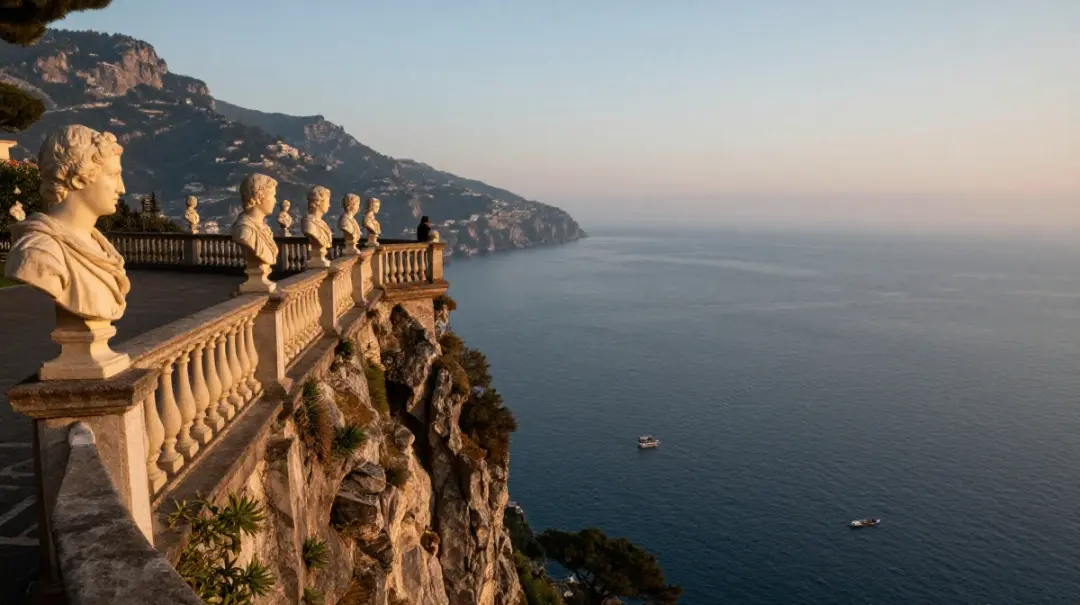
A 15-minute walk from the center of Ravello along a quiet country lane brings you to Villa Cimbrone, a historic estate that has been described, without much exaggeration, as the home of one of the finest views in the world. The villa itself was largely reconstructed in the early 20th century by English aristocrat Ernest William Beckett, who purchased the ruined medieval property and transformed it into a romantic interpretation of an Italian country estate.
Today it operates as a luxury hotel, but the gardens and their celebrated viewpoint remain open to the public during the day. The Terrace of Infinity is the centerpiece of the gardens. A long stone balustrade at the edge of a sheer cliff, punctuated by a series of marble busts depicting figures from classical mythology, it drops away to a view of the sea and coastline that seems to have no boundary.
On a clear day the terrace looks south across the Gulf of Salerno with nothing between you and the horizon. Greta Garbo and Leopold Stokowski famously hid here from the press in 1938 during their secret relationship, choosing the villa’s remote beauty as their refuge. Standing at the terrace in the early morning before the day visitors arrive, with the sea air rising from hundreds of meters below, is an experience that stays with you permanently.
Day 5: Pompeii
Place 14: Pompeii Archaeological Park
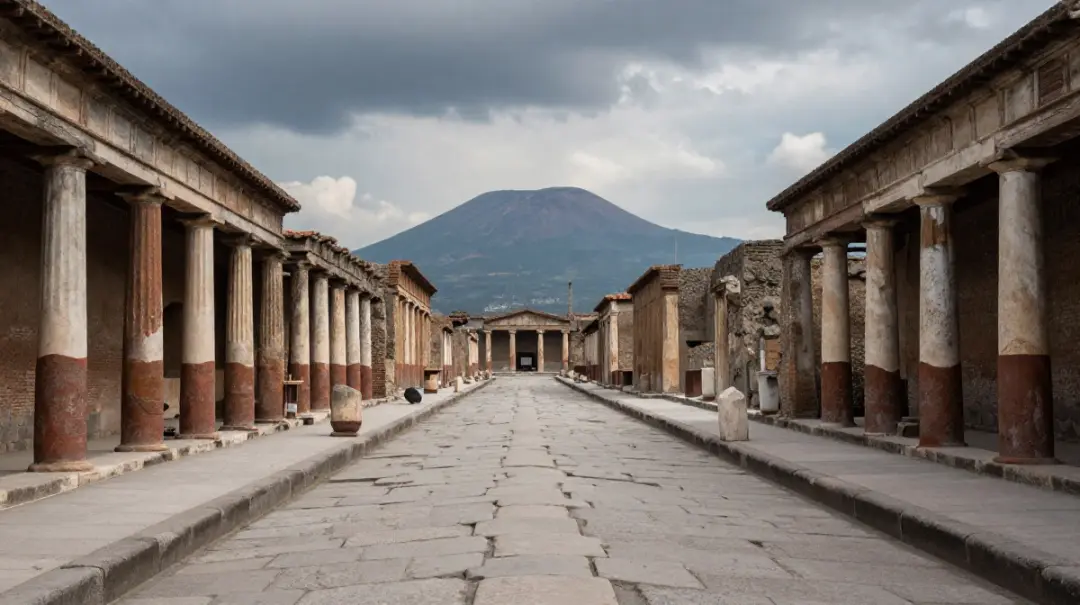
Pompeii is not strictly part of the Amalfi Coast, but no five-day itinerary for the region is complete without it. Located approximately an hour from Sorrento by road, the ancient Roman city was buried under meters of volcanic ash and pumice when Mount Vesuvius erupted catastrophically on the 24th of August, 79 AD. The eruption killed the population within hours and sealed the city under a layer of debris that preserved it almost perfectly for nearly 1,700 years until excavations began in the 18th century.
What makes Pompeii so extraordinary is not merely its age but its completeness. Walking through the streets of the city you are walking through a Roman urban environment that has been frozen in time — the street plan, the paving stones worn smooth by two thousand years of foot traffic, the painted election notices still visible on the walls of buildings, the bakeries with their stone mills still in place, the Thermopolia (ancient fast food counters) with their ceramic serving vessels set into the counter tops. The forum, the temples, the bathhouses, the amphitheater, the grand private homes with their mosaic floors and painted gardens — all of it present, all of it astonishing.
The plaster casts of the victims, created by filling the voids left in the ash by the decomposed bodies of those who did not escape, are the most emotionally affecting element of any visit. They are displayed at several points around the site and they communicate the human reality of the disaster in a way that no description can match. Allow a minimum of three hours and preferably a full morning for a meaningful visit. Booking tickets in advance is essential, and a guided tour transforms the experience significantly.
Place 15: Pompeii to Naples: A Final Taste of Southern Italy
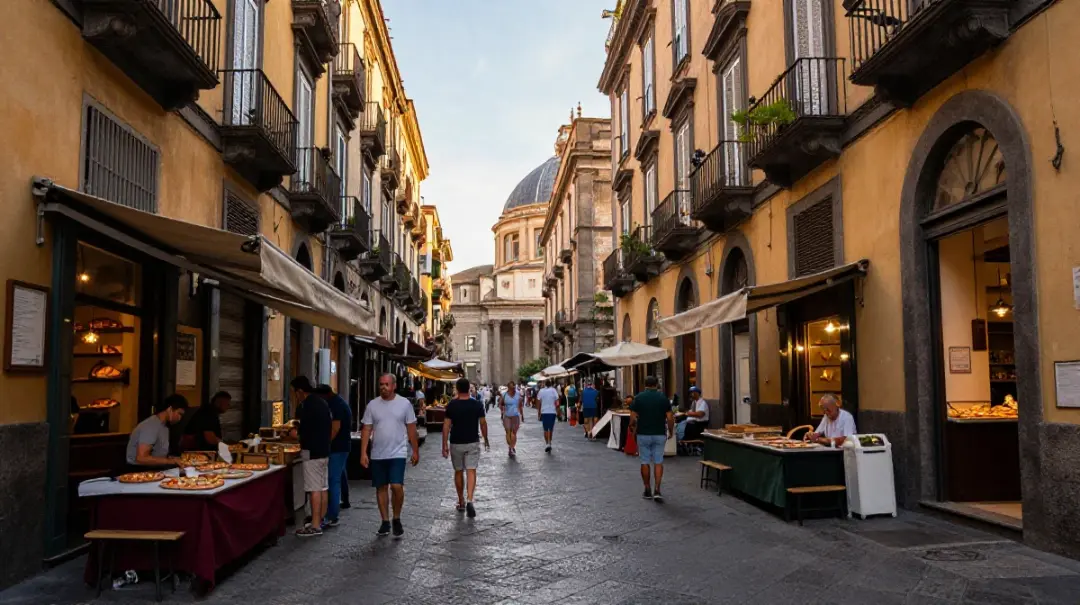
The final experience of this itinerary is not a single landmark but a deliberate, unhurried transition. After leaving Pompeii with its weight of history, the journey back toward Naples offers a last opportunity to absorb the landscape that has framed the entire trip — the great curve of the bay, Vesuvius brooding on the skyline, the flat coastal plain giving way to the urban energy of the city.
If your flight departs in the evening, Naples itself rewards a final few hours of attention. The historic center, a UNESCO World Heritage Site in its own right, is a chaotic and fascinating contrast to the ordered beauty of the Amalfi Coast. The Spaccanapoli, a long straight street that bisects the old city, is lined with ancient churches, street food vendors, and the kind of urban life that has not changed fundamentally in centuries. And Naples without a pizza is not Naples at all.
The city is the birthplace of pizza as the world knows it, and eating a Margherita from one of the historic pizzerias in the old center — the crust blistered and charred from a wood-fired oven, the tomato sauce sharp and bright, the buffalo mozzarella melting into pools — is the perfect final act of an Amalfi Coast journey.
Best Time to Visit the Amalfi Coast
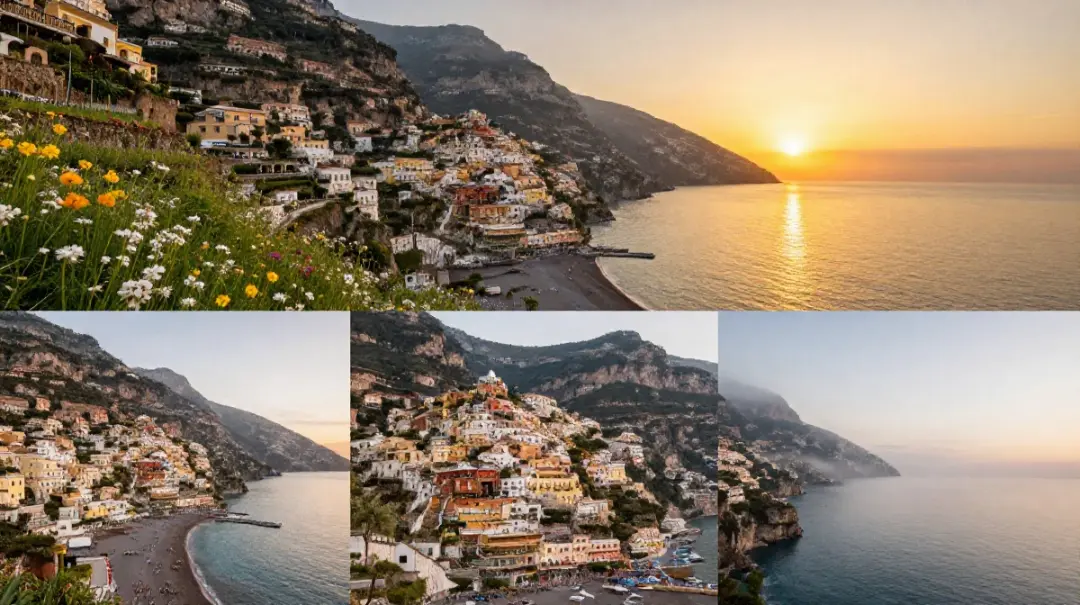
May, June, September, and October represent the ideal travel windows. The weather is warm and stable, the sea is swimmable, the crowds are manageable, and accommodation prices are lower than the peak summer rates. July and August are the busiest and most expensive months, with extremely crowded ferries and buses and high temperatures that make daytime sightseeing demanding.
Spring visits in April and May offer the added bonus of wildflowers covering the hillside terraces. Winter is very quiet with many hotels, restaurants, and attractions either closed or operating on reduced hours, though the landscape is beautiful and prices are at their lowest.
Where to Stay
Sorrento is the most practical base for the itinerary as described, offering the best transport connections, the widest range of accommodation, and the most reasonable prices relative to the other towns. Positano is the most romantic and scenic base but comes at a higher price point and requires a good level of physical fitness given the steep terrain.
Amalfi town offers a central position on the coast that makes day trips in both directions straightforward. Ravello is ideal for those who want peace and cooler temperatures and are willing to take the bus down to the coast each day. Whatever base you choose, booking accommodation at least three to four months in advance is strongly recommended for travel between June and September.
Conclusion
The Amalfi Coast delivers something that very few destinations can — the sense that the world has arranged itself purely for the pleasure of those looking at it. The 15 places and experiences in this Amalfi Coast itinerary cover the full range of what makes this coastline one of the great travel destinations on earth. Ancient cities and medieval cathedrals, sea caves and clifftop gardens, island glamour and mountain hiking trails, the simple pleasure of a lemon granita eaten on a harbor wall with the afternoon sun warm on your face.
Five days will pass faster than you believe possible, and you will almost certainly begin planning your return before you have even left. Whether this is your first time visiting or you are a seasoned traveler coming back for more, no Amalfi Coast itinerary will ever feel quite long enough.
Go slowly. Eat everything. Stay one extra day if you possibly can.
You may also like this post: 10 Best Greek Islands to Visit: Plan Your Perfect Greek Holidays
Frequently Asked Questions
Q1: How many days do I need on the Amalfi Coast?
Five days is the ideal minimum for seeing the main highlights comfortably without feeling rushed. Three days is workable if you focus on Positano, Amalfi, and a half-day in Capri, but you will need to move quickly. Seven or more days allows for a far more relaxed pace and time to explore the smaller, less-visited towns like Praiano, Minori, Atrani, and Vietri sul Mare.
Q2: What is the best base for the Amalfi Coast?
Sorrento is the most practical base for first-time visitors. It is larger, better connected by rail and ferry, and generally more affordable than Positano or Amalfi. Positano is the most visually immersive experience if your budget allows. Amalfi town is ideally placed for reaching both the eastern and western sections of the coast without too much travel time.
Q3: When is the best time of year to visit?
May, June, September, and October offer the best balance of warm weather, manageable crowds, and reasonable prices. July and August are the busiest and most expensive months but offer the warmest water temperatures. Spring is particularly beautiful with wildflowers on the hillside terraces. Winter is very quiet, with many hotels and restaurants closed, though the landscape is dramatic and prices are low.
Q4: How do you get around the Amalfi Coast without a car?
The SITA bus network connects all the major towns along the coast and is the most affordable option. Ferries run between Sorrento, Positano, Amalfi, and Capri and are often more enjoyable than the road journey, particularly in summer. Private taxis and hired drivers are widely available for those who want flexibility and are comfortable with a higher cost.
Q5: Is the Path of the Gods suitable for beginners?
The Path of the Gods is a moderately challenging hike rather than a technical trail, and it is accessible to any reasonably fit adult who is comfortable walking on uneven terrain and is not troubled by heights. The standard route from Bomerano to Nocelle covers approximately eight kilometers with a significant descent in the second half and takes between three and four hours at a comfortable pace. Solid walking shoes with good grip are essential. It is not suitable for very young children or anyone with serious mobility limitations.